 By canadianyardie
GTA Jamaicans, Will This Change How We Move?
TTC’s New Fare Capping Starts This September: GTA Jamaicans, Will This Change How We Move?
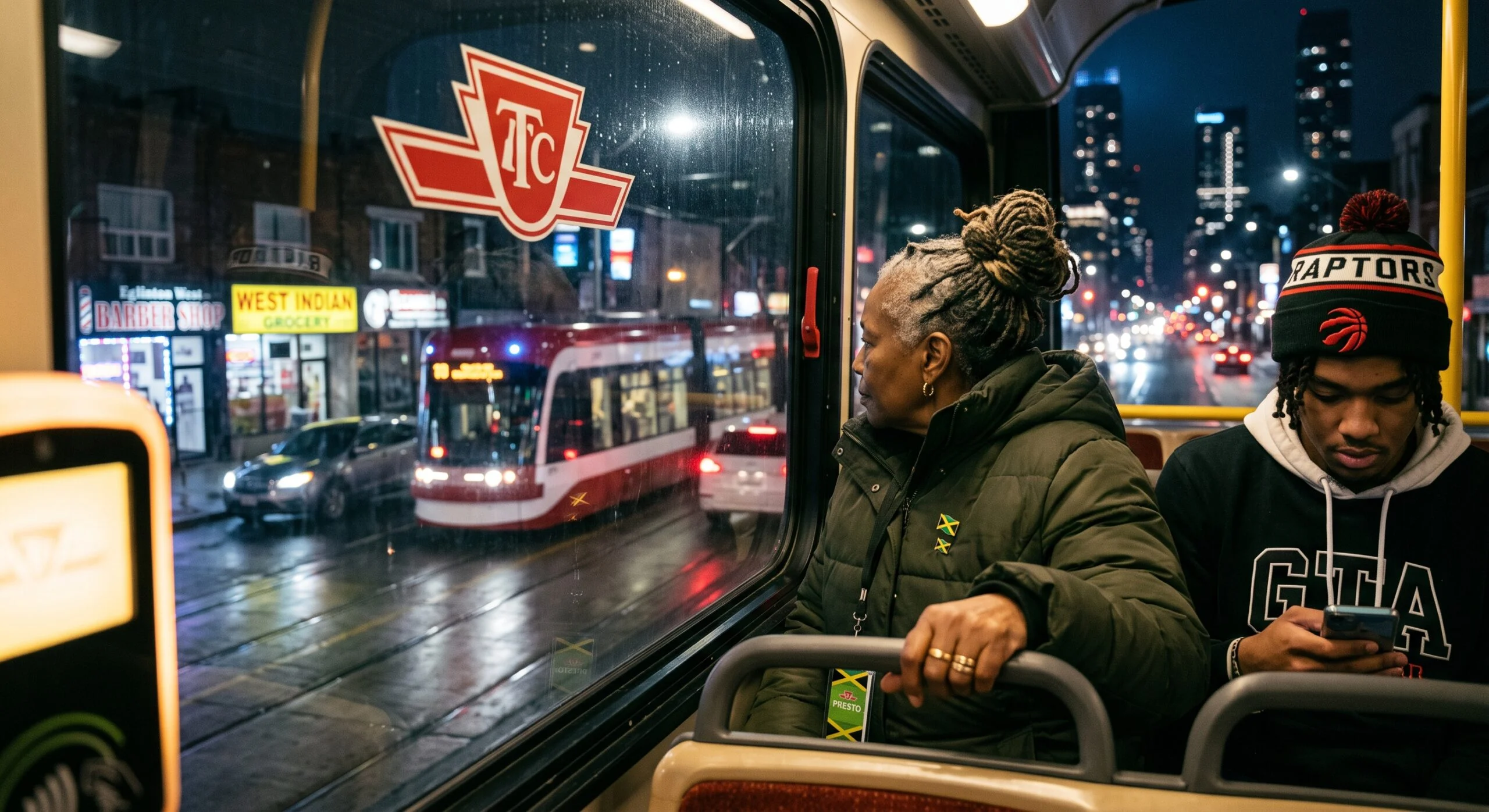
It is a familiar scene for thousands of Jamaicans living across the Greater Toronto Area (GTA). The alarm clock buzzes well before the sun makes its appearance. In the dim light of an early morning in Scarborough, the quiet residential streets of Brampton, or the high-rises of Jane and Finch, the daily hustle begins. We wrap ourselves in heavy coats for half the year, grab a thermos of tea or porridge, and head out the door to catch the bus.
For decades, the Jamaican diaspora has been the backbone of this city’s essential workforce. We are the nurses, the personal support workers, the construction tradespeople, the transit operators, the teachers, and the tireless students striving for a better future. And for just as long, the Toronto Transit Commission (TTC) has been the vital, albeit sometimes frustrating, artery connecting our homes to our places of work, worship, and community.
But navigating the sprawling metropolis of Toronto has always come at a steep financial cost. With the staggering rise in the cost of living, inflation driving up the price of everything from rent to a simple plate of oxtail, every dollar matters. Now, a massive shift in how we pay for transit is on the horizon. The TTC has officially announced that starting September 1, 2026, monthly fare capping is coming to the system.
It is a policy change that sounds fantastic on paper, but the real question for the Jamaican community in the GTA is this: Will this actually change how we move around the city?
Breaking Down the Fare Capping Policy
Before we dive into the cultural and day-to-day impacts, we have to look at the facts. In May 2026, the TTC released the details of a fundamentally new approach to transit affordability, integrated into their 2026 operating budget.
Starting this September, customers who pay their fare using a PRESTO card, a debit or credit card, or a mobile wallet will automatically ride for free after paying for 47 trips in a single calendar month. Once you hit that 47th tap, the system stops charging you. Every subway ride, streetcar hop, and bus trip for the remainder of that month is completely free. Even better, the TTC has promised that in 2027, this cap will drop to just 40 paid trips.
Mayor Olivia Chow championed the move, stating, “We’re making the TTC more affordable for people who rely on and use transit the most. With fare capping, you pay as you go, and once you’ve taken 47 trips in a month, the rest of your rides are free. No more deciding whether you can afford a monthly pass upfront. No more overpaying if you don’t ride enough to make a pass worth it. We’re doing this in stages, so next year it drops to 40 rides and you’ll save even more.”
TTC Chair Jamaal Myers echoed this sentiment, calling it a “fundamental shift in how Torontonians pay for transit,” noting that it follows the successful rollout of the open payments program and marks the third consecutive fare freeze.
As a direct result of this modern “pay-as-you-go” system, the traditional Youth, Adult, Senior, and Fair Pass Transit Discount Program TTC Monthly Passes, along with the Youth and Senior 12-Month Passes, will be permanently discontinued as of August 31, 2026. (Take note: Adults on the 12-Month TTC Pass subscription and post-secondary students buying the Post-Secondary Monthly Pass should keep doing so, as those will still guarantee the lowest specific rates).
The End of the “Poverty Penalty”
To understand why this is a massive deal for the Jamaican community, we have to talk about the “poverty penalty.” For years, if you wanted the financial benefit of unlimited travel, you had to front a massive chunk of money on the first day of the month. Buying a monthly pass meant parting with over $150 all at once.
For a single mother working two jobs, a newcomer trying to find their footing, or a family sending three kids to high school, finding that lump sum at the exact same time rent is due was often impossible. Instead, many people were forced to load $10 or $20 onto their PRESTO cards at a time. The cruel irony? By paying per ride throughout the month, they ended up spending far more than the cost of a monthly pass. They were penalized for not having the upfront capital.
Fare capping eliminates this completely. By simply tapping your bank card, phone, or PRESTO card on your daily commute, the system does the math for you. You pay your regular fare when you have the money, and the TTC rewards your loyalty by cutting you off at 47 trips. It removes the stress of the 1st-of-the-month scramble.
How Do Yaadies Navigate the GTA Today?
The Jamaican footprint in the Greater Toronto Area is vast and geographically scattered. While Eglinton Avenue West remains our historic cultural hub—Little Jamaica—the reality of gentrification, the grueling years of the Eglinton Crosstown LRT construction, and the pursuit of affordable housing have pushed our community into every corner of the GTA.
We live deep in Scarborough, up in North York, and increasingly across the municipal borders in Brampton, Mississauga, and Durham Region. A typical commute for a Jamaican-Canadian is rarely a simple one-train ride. It often involves taking a Brampton Züm bus or MiWay to a TTC subway station, riding down to the downtown core, and perhaps catching a streetcar.
With the recently introduced “One Fare” program—which eliminated double fares when transferring between the TTC and regional transit agencies like GO Transit, Brampton Transit, and MiWay—the borders of the city have already started to feel less restrictive. Now, pair that with the TTC’s September fare cap. If you live in Brampton but work in Toronto, your TTC portion of the commute will cap out at 47 rides.
For the essential workers in our community—especially the aunties and mothers working in healthcare, long-term care, and hospitality—this is a game-changer. Shift work often requires traveling during off-peak hours, taking multiple vehicles, and occasionally running errands between shifts. When you are tapping onto the transit system three or four times a day, you will hit that 47-ride cap by the second or third week of the month. After that, your transportation budget drops to zero.
Will Free Rides Change Our Weekends?
Beyond the daily grind of work and school, there is a deep social element to consider. How often have you declined an invitation to a family gathering, a church service in another borough, or a trip down to the Harbourfront because you didn’t want to spend the extra money on transit?
“Me nah go all the way down deh, the fare too much just fi buy a patty,” is a sentiment heard in many Jamaican households. Transit costs can be isolating. When money is tight, you stay in your immediate neighborhood. You shop at the local West Indian grocer, even if the one across town has a better sale on yellow yam, because the transit fare cancels out the savings.
But imagine it is the 22nd of the month. You’ve been commuting to work every day, and you’ve hit your 47 trips. Your transit for the rest of the month is entirely free. Does this change your weekend plans?
For Little Jamaica on Eglinton West, this could be a lifeline. The businesses there—the barber shops, hair salons, record stores, and legendary Caribbean restaurants—have fought tooth and nail to survive a decade of disruptive construction and economic downturns. If Jamaicans living in Scarborough, Rexdale, or downtown know they can take the newly opened transit lines to Eglinton without paying an extra dime in the last week of the month, we might see a beautiful resurgence of community support.
It encourages exploration. It means a teenager in Jane and Finch can travel to a free museum night downtown without asking their parents for TTC money. It means an elder can visit their grandchildren in a different part of the city more frequently. It transforms the transit system from a strict commuter tool into a genuine vehicle for community connection.
The Catch: Reliability and Safety Must Keep Up
However, affordability is only one side of the coin. TTC CEO Mandeep S. Lali stated that in addition to affordable transit, customers want improved system reliability, safety, and cleanliness. And on this front, the Jamaican community is rightfully demanding.
A free ride is not a good deal if the bus is consistently twenty minutes late while you freeze at the shelter in February. A capped fare doesn’t make up for the anxiety of navigating subway stations where safety has become a glaring issue in recent years. Our community members, particularly those who work night shifts or early morning hours, need a transit system that is highly visible, secure, and running strictly on schedule.
Furthermore, the technology must be flawless. The transition away from the Monthly Pass means everyone is relying on the automated tracking of their PRESTO, debit, or credit taps. The most important rule to remember come September 1st is card consistency. If you tap your physical PRESTO card on Monday, and then tap your iPhone’s Apple Pay on Tuesday, the system will read you as two different people. To ensure you hit your 47-trip cap, you must use the exact same payment method for every single ride throughout the month. If the digital infrastructure glitches, the people who can least afford it will be the ones fighting customer service for refunds.
Moving Forward: Wha Unnu Tink?
As we look toward September 2026, the introduction of TTC fare capping undeniably feels like a step in the right direction. It dismantles a system that inadvertently punished lower-income riders, it integrates smoothly with modern digital wallets, and it promises to make Toronto feel just a little bit smaller and a lot more accessible.
For the Jamaican community in the GTA—a community that has poured its sweat into the infrastructure and culture of this city—it offers a tangible piece of financial relief. Forty-seven trips might seem like a lot, but for the hard-working commuter, those taps add up fast. By 2027, when the cap drops to 40 trips, the savings will be even more profound.
It gives us the freedom to move, to explore, and to connect with our extended families without the constant mental arithmetic of transit costs. It allows us to support our cultural hubs, our small businesses, and our community events with greater ease.
But policies are only as good as their real-world application. As we prepare for this shift, the community needs to stay informed, ensure our elders understand how the tap-tracking works, and continue to hold the city accountable for the safety and reliability of the vehicles we ride.
So, GTA Jamaicans, the mic is passed to you. When September rolls around and the monthly passes disappear in favor of the 47-trip cap, how will you navigate the city? Will you find yourself taking more trips on the weekend? Does this relieve the stress of the 1st-of-the-month budget crunch? Or are you more concerned about the buses actually showing up on time?
Drop a comment, share this with your family group chat, and let’s talk about it. Wha unnu tink? Will this truly change how we move?





COMMUNITY DISCUSSION 0
Write CommentBe the first to join the conversation!
What are your thoughts on this story? Drop your perspective, commentary, or insider insight below.