 By canadianyardie
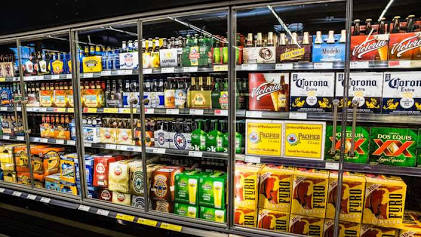
For almost a century, purchasing alcohol in Ontario was a rigidly controlled routine. Citizens planned their weekends around the operating hours of the Liquor Control Board of Ontario (LCBO) and The Beer Store. If you forgot to buy wine for a Sunday dinner or beer for a late-night hockey game, you were simply out of luck. All of that changed when the provincial government accelerated its plan to dismantle this quasi-monopoly. By late 2024, convenience stores, big box retailers, and local grocery shops began stocking beer, wine, cider, and ready-to-drink cocktails. Now, in the fall of 2026, the novelty of grabbing a six-pack along with milk and bread has settled into everyday reality.
The rollout was billed as the largest expansion of consumer choice since the end of prohibition. For many, it has delivered exactly what was promised. Shoppers enjoy unprecedented convenience, and independent retailers have found a lucrative new revenue stream. However, the true cost of this accessibility is now coming into sharp focus. With two years of data available, experts are painting a complex picture. The financial implications for the province have been massive, but the most alarming statistics center on public health. Addiction rates, hospital visits, and socioeconomic disparities reveal the darker side of unparalleled convenience.
The Retail Boom: A Lifeline for Small Business
There is no denying the positive impact this expansion has had on small business owners across Ontario. When the program launched, more than 4,200 alcohol outlets were licensed almost immediately. That number has steadily climbed toward the government’s projection of up to 8,500 new retail locations. For local convenience stores, this has been a substantial economic catalyst.
Prior to the rollout, independent corner stores were struggling with razor-thin margins. The Ontario Convenience Stores Association projected that the addition of alcohol sales could generate a 15 to 20 percent increase in overall revenue for these small shops. This projection has largely materialized over the last two years. Store owners report that customers who come in for a craft beer or a bottle of wine often purchase snacks, lottery tickets, and household items on their way out. The foot traffic alone has revitalized many neighborhood stores that were previously at risk of closing.
Furthermore, the expansion has presented a unique opportunity for Ontario’s craft beer and cider industry. Under the old system, securing prime shelf space at The Beer Store or the LCBO was incredibly difficult for small, independent brewers. The new landscape allows these local producers to build direct relationships with neighborhood stores. While large macro-breweries still dominate the market, craft producers now have thousands of localized access points to reach their consumers and showcase local flavors.
The Financial Reality: A Heavy Cost to the Province
While private retailers are reaping the rewards, the public ledger tells a very different story. The decision to break The Beer Store’s long-standing monopoly and bypass the traditional LCBO retail channels came with a staggering price tag.
In January 2025, the Financial Accountability Office of Ontario (FAO) released a comprehensive report detailing the fiscal fallout of the expansion. The FAO estimated that expanding the beverage alcohol marketplace will result in a net cost to the province of $1.4 billion by the end of 2030. The decision to accelerate the rollout to 2024 rather than waiting for the original target of 2026 alone accounted for $612 million of this deficit.
Where exactly did this money go? The province paid out up to $225 million to The Beer Store to ensure a smooth transition, protect jobs temporarily, and maintain its recycling operations. More significantly, the government is expected to lose $1.28 billion in tax revenues. When alcohol sales shift from the LCBO and The Beer Store to independent grocery and convenience stores, those specific retail taxes diminish.
There is one positive financial offset. Because the LCBO transitioned into the exclusive wholesaler for all these new retail locations, its wholesale revenue surged. The FAO estimated a $353 million increase in LCBO net income directly resulting from this wholesale activity. However, this wholesale profit is not nearly enough to cover the billion-dollar shortfall. Taxpayers are ultimately subsidizing the cost of this convenience, raising critical questions about the long-term sustainability of the province’s fiscal strategy.
Addiction and Alcoholism: The Public Health Toll
The most critical concern surrounding the privatization of alcohol sales was always the impact on public health. Addiction specialists and mental health organizations warned that increasing the physical availability of alcohol would inevitably lead to higher rates of substance abuse. The statistics from 2025 and 2026 suggest their worst fears are being realized.
Before the expansion even began, alcohol was already the most heavily consumed and burdensome substance in Canada. According to Public Health Ontario, alcohol consumption was historically responsible for over 4,000 deaths, 22,000 hospitalizations, and nearly 195,000 emergency department visits in the province every single year. The healthcare costs associated with alcohol in Ontario had already ballooned to $2.3 billion in direct medical expenses and a devastating $7.11 billion when accounting for lost productivity and criminal justice costs.
Since the introduction of corner store sales, high-risk drinking behaviors have intensified. A landmark study released by the Centre for Addiction and Mental Health (CAMH) in early 2026 highlighted a deeply concerning trend. While the overall percentage of Ontarians who consume alcohol actually dropped slightly to 76.2 percent, the severity of drinking among active consumers skyrocketed.
The CAMH study found that daily drinking among adults jumped to 10.1 percent, up significantly from 7.1 percent in 2019. Furthermore, symptoms of severe alcohol dependence rose to 12.1 percent of the population. The normalization of seeing alcohol beside everyday essentials has made it increasingly difficult for recovering alcoholics to avoid triggers. For someone battling alcohol use disorder, the local gas station or corner store was once a safe environment. Now, it is just another source of temptation.
Weekly binge drinking, defined as consuming five or more drinks on a single occasion, climbed to 9.6 percent. Dr. Leslie Buckley, the Chief of the Addictions Division at CAMH, noted that while casual drinking is trending downward, those at high risk of harm are drinking at record levels. The sheer density of alcohol outlets has removed the natural friction that used to limit impulse purchases. When a craving hits at 10:00 PM, a five-minute walk to the corner store is all it takes to relapse.
Socioeconomic Disparities: A Tale of Two Neighborhoods
The negative impacts of this expansion are not being felt equally across the province. The proliferation of new alcohol retailers has heavily targeted marginalized communities, exacerbating existing health inequities and placing vulnerable populations at risk.
A repeated cross-sectional study published in the Canadian Journal of Public Health in September 2025 examined the distribution of these new alcohol outlets based on neighborhood demographics. The findings were stark. Immediately following the expansion, the lowest socioeconomic status neighborhoods experienced a massive 400 percent increase in the number of alcohol outlets within a 1500-meter radius. In sharp contrast, the highest socioeconomic status neighborhoods saw only a 183 percent increase.
This oversaturation in lower-income areas is a well-documented driver of public health crises. The study emphasized a clear dose-response relationship. The more accessible alcohol is in a disadvantaged community, the higher the rates of alcohol-attributable harm, including violence, fatal accidents, and chronic liver disease. The residents of these neighborhoods already face significant barriers to accessing mental health and addiction treatment. By flooding these specific areas with cheap and readily available alcohol, the province has inadvertently placed the heaviest burden of this policy on those least equipped to bear it.
Furthermore, lower levels of education and income are strongly associated with heavy episodic drinking. When individuals experiencing poverty and immense daily stress are surrounded by easily accessible alcohol, the risk of self-medication rises exponentially. Advocacy groups have heavily criticized the government for failing to implement zoning restrictions that could have prevented the aggressive clustering of alcohol retailers in vulnerable communities.
Looking Ahead: Balancing Choice and Consequence
As Ontario navigates the ongoing reality of this expanded marketplace, policymakers find themselves at a crossroads. The positive aspects of the change are clearly visible to the public. The modernization of the retail landscape has aligned Ontario with international norms, ending decades of archaic prohibition-era policies. Consumers appreciate being treated like responsible adults, free to purchase a bottle of wine with their groceries. Independent retailers are thriving financially, and craft brewers are finding entirely new audiences across the province.
Yet, the negative impacts cannot be brushed aside. The financial deficit of $1.4 billion represents funds that could have been invested in the very healthcare systems now straining under the weight of increased alcohol consumption. The spike in severe alcohol dependence, daily drinking, and binge drinking signals a growing public health emergency. Mental health and addiction organizations are pleading with the provincial government to allocate a significant portion of the newly generated wholesale profits directly to addiction treatment and recovery services.
The situation requires a nuanced approach moving forward. Potential mitigation strategies could include stricter regulations on advertising within convenience stores, mandated warning labels on products, and strict limits on the physical placement of alcohol products near store entrances or checkout counters. Additionally, there is a desperate need for targeted funding to support community mental health services, particularly in the lower-income neighborhoods that have been heavily saturated with new alcohol retailers.
Ontario’s grand experiment in retail liberalization has proven that convenience comes at a steep price. The ease of buying a six-pack at midnight is a modern luxury, but it is one subsidized by lost tax revenues and paid for in the emergency rooms of hospitals across the province. As the data continues to roll in, the true legacy of this policy will depend entirely on how the government addresses the thousands of Ontarians who are falling through the cracks of this newly expanded marketplace. The challenge for 2026 and beyond is finding a way to preserve consumer freedom without sacrificing the health and well-being of the public.




COMMUNITY DISCUSSION 0
Write CommentBe the first to join the conversation!
What are your thoughts on this story? Drop your perspective, commentary, or insider insight below.