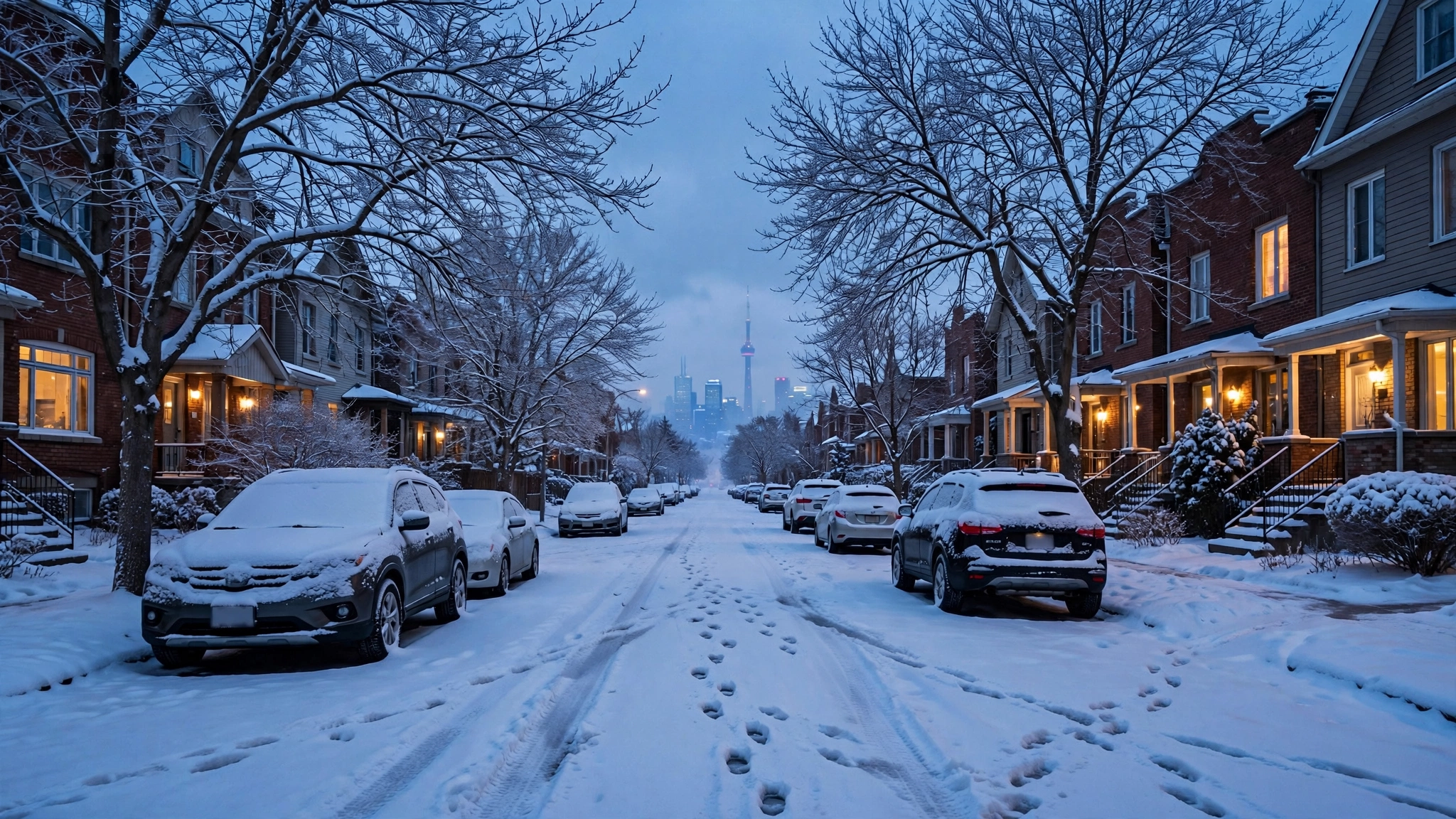
Nothing prepares you for it. You step off the plane in October feeling fine, then January arrives and the air itself feels like it is trying to hurt you. Every Caribbean newcomer in Toronto goes through this. The good news: winter here is a system, and once you learn the system, you will be fine.
This guide covers what Toronto winter actually feels like, how to dress for it, what your heating bill will do, how to drive in snow for the first time, and where to get geared up without emptying your account.
What winter actually feels like
Toronto’s coldest months are January and February. The average January day runs from about -2°C in the afternoon down to -7°C at night. That sounds manageable until the wind picks up. Windchill regularly pushes the “feels like” temperature into the -20s, and on the worst days it touches -30°C. At those temperatures, exposed skin can get frostbite in under 30 minutes.
Snow usually starts with light flurries in November. Steady cold and regular snowfall settle in from December through February, and January is the snowiest month with roughly 12 days of snow. The other shock is the darkness. Around the December solstice, Toronto gets fewer than 9 hours of daylight. You will leave for work in the dark and come home in the dark. Plan for that mentally, not just physically.
Dress in layers, not one big jacket
The single most important concept is layering. One thick sweater under a thin jacket will leave you freezing. Three proper layers will keep you comfortable at -15°C:
- Base layer: moisture-wicking thermal top and bottoms. This pulls sweat off your skin. Cotton is the enemy here, it holds moisture and makes you colder.
- Middle layer: insulation. A fleece or wool sweater traps warm air.
- Outer layer: a windproof, waterproof shell or parka blocks wind and snow.
You can buy the layers over time, but get the outer layer and boots first. Those two items do most of the work.
The non-negotiable gear list
If you buy nothing else, buy these:
- A proper winter parka. Not a fashion jacket, not a fall coat. Look for a hood, a rating or fill that handles -20°C or lower, and a length that covers your hips or thighs. This is the one item worth spending real money on.
- Waterproof insulated boots. Sneakers and fashion boots will betray you the first time you step in slush. Look for waterproofing plus insulation rated to at least -25°C, with a grippy tread.
- A toque. You lose a lot of heat through your head, and ears get painfully cold fast.
- Insulated gloves or mittens. Mittens are warmer than gloves. Touchscreen-compatible gloves mean you do not have to expose your fingers to use your phone.
- A scarf or neck gaiter. Covers the gap between your toque and your jacket where wind loves to sneak in.
- Wool or wool-blend socks. Cotton socks plus boots equals cold, damp feet. Wool stays warm even when damp.
Expect a full starter kit, jacket, boots and accessories, to run a few hundred dollars if you shop smart. Which brings us to…
Where to buy winter gear cheap
You do not need to buy everything at full price in October. Toronto is full of options:
- Winners and Marshalls: discounted brand-name parkas and boots, best selection in September and October.
- Decathlon: genuinely good budget base layers, fleeces and accessories.
- Costco: bulk-value parkas, socks and gloves if you have a membership.
- Thrift stores: Value Village, Talize and local charity shops often have barely-worn parkas for a fraction of retail. Check the zippers and seams.
- Facebook Marketplace and Kijiji: newcomers leaving Canada sell full winter wardrobes cheap in spring, and people upgrade every fall.
- End-of-season sales: if you can wait until February or March, last year’s stock goes 40 to 60 percent off. Buy next winter’s parka then.
Start shopping now, in October. Selection and prices are best before the first real cold snap, when everyone panics at once.
Your heating bill, explained
If your rent does not include heat, your first winter utility bill will be a shock. A few things to know:
- Turn the thermostat down when you sleep or leave. Around 20°C when you are home and 17 to 18°C when you are out or asleep is the standard advice. Every degree lower saves real money over a season.
- Seal the drafts. Cheap window insulation film and draft stoppers under doors make a noticeable difference in older Toronto houses and basement apartments, which is where many newcomers land.
- Do not heat rooms you do not use. Close vents and doors to spare bedrooms.
- Ask how the heat works before you sign a lease. Forced air, radiators, baseboard electric, each has different costs and quirks. Baseboard electric heat is the most expensive to run, so factor that into what “affordable rent” really means.
If your heat is included in rent, you still want to know where the thermostat is and how the radiators or vents work before January. Ask your landlord now, not during a cold snap.
Driving in snow for the first time
If you learned to drive in Jamaica, Trinidad or Barbados, snow driving is a new skill. Respect it.
- Get winter tires. They are not legally required in Ontario the way they are in Quebec, but the difference in grip on snow and ice is enormous. All-seasons are not winter tires, no matter what the name suggests. Many insurers offer a winter tire discount, ask yours.
- Slow down and leave space. Brake gently and early. If you skid, ease off the gas and steer where you want to go, do not slam the brakes.
- Clear the whole car. Not just a peephole in the windshield. Snow flying off your roof onto the car behind you is dangerous and ticketable.
- Keep an emergency kit in the trunk: a snow brush and ice scraper, a small shovel, jumper cables, a blanket, and a bag of kitty litter or sand for traction if you get stuck.
- Top up your washer fluid with the winter-rated kind (rated to -40°C). Summer fluid freezes on contact in January.
If you are not confident, there is no shame in taking transit on storm days. That is what it is for.
Getting around the GTA in a storm
Winter is when you learn the real transit system, and in the GTA that means more than the TTC. Newcomers land in Mississauga, Brampton, Scarborough, Vaughan and Durham too, and each has its own network. The good news: one PRESTO card works across all of them, and you get discounted co-fares when transferring between GO Transit and local systems.
TTC (Toronto): Buses run late in snow, streetcars crawl, and subway delays happen. Build in an extra 20 to 30 minutes on storm days. Dress for the wait, not just the ride: the platform and the bus stop are where you will feel the cold.
GO Transit (region-wide): The trains and buses connecting Toronto to Mississauga, Brampton, Vaughan, Markham, Durham and beyond. GO is the backbone for anyone commuting across city lines. In heavy snow, switches freeze and trains slow down, so check departure boards before leaving and have a backup plan. Lakeshore West and East are the most frequent lines.
MiWay (Mississauga): Connects to the TTC at Kipling and Islington stations and to GO at Port Credit, Cooksville and Dixie. Express routes along Hurontario and Dundas are your best bet in bad weather.
Brampton Transit: The Zum bus rapid transit lines (501, 502, 505, 511) run in dedicated lanes that stay more reliable in snow than local routes. Connects to GO at Bramalea, Malton and Brampton stations.
YRT and Viva (York Region): Viva blue, purple, orange and yellow BRT lines connect Vaughan, Markham and Richmond Hill to Finch station and the Vaughan subway extension. Local YRT buses fill the gaps but slow down the most in storms.
DRT (Durham Region): Connects Pickering, Ajax, Whitby and Oshawa to GO stations and the TTC at Scarborough Town Centre. If you are commuting from Durham, the GO train is almost always the better winter choice than the bus.
The universal rules, wherever you are: keep your PRESTO card loaded so you are not fumbling with frozen fingers, download a transit app with real-time arrivals so you can wait inside somewhere warm, and on storm days leave earlier than you think you need to. Heated shelters are rare. Your coat is the shelter.
Your body in winter
Winter is not just cold, it is dry. Indoor heating sucks the moisture out of the air and your skin will notice.
- Moisturize aggressively. Thick creams and body butters, not thin lotions. Shea butter, cocoa butter, the heavy stuff. Apply right after showering.
- Get a humidifier for your bedroom if you wake up with a dry throat or nosebleeds. They are cheap and they help a lot.
- Vitamin D matters. With under 9 hours of weak daylight, many newcomers end up deficient. Talk to a doctor or pharmacist about a supplement.
- Watch your mood. The darkness gets to people. Short days plus cold plus being far from home is a real combination. Get outside in daylight when you can, stay connected with people, and know that feeling low in February is common, not a personal failure.
The bottom line
Winter in Toronto is not a vibe, it is logistics. Layers, boots, a real parka, a plan for your heating bill, and respect for snow on the roads. Handle those and your first winter becomes a story you tell, not a trauma you carry.
October is the month to prepare. The gear is in stores, the prices are still sane, and you have weeks before the real cold arrives. Future you, standing on a subway platform in January at -18°C, will be grateful.
CHECKLIST BEFORE FIRST SNOWFALL
- Winter parka rated to -20°C or lower
- Waterproof insulated boots
- Toque, insulated gloves, scarf, wool socks
- Thermal base layers (top and bottom)
- Winter tires booked or transit storm plan set
- Snow brush, ice scraper and winter washer fluid in the car
- Thermostat strategy set, drafts sealed
- Moisturizer, lip balm and humidifier sorted
- Vitamin D on the shopping list


Get the next guide first. Join the Yardie Dispatch.



Be the first to comment. Start the conversation!