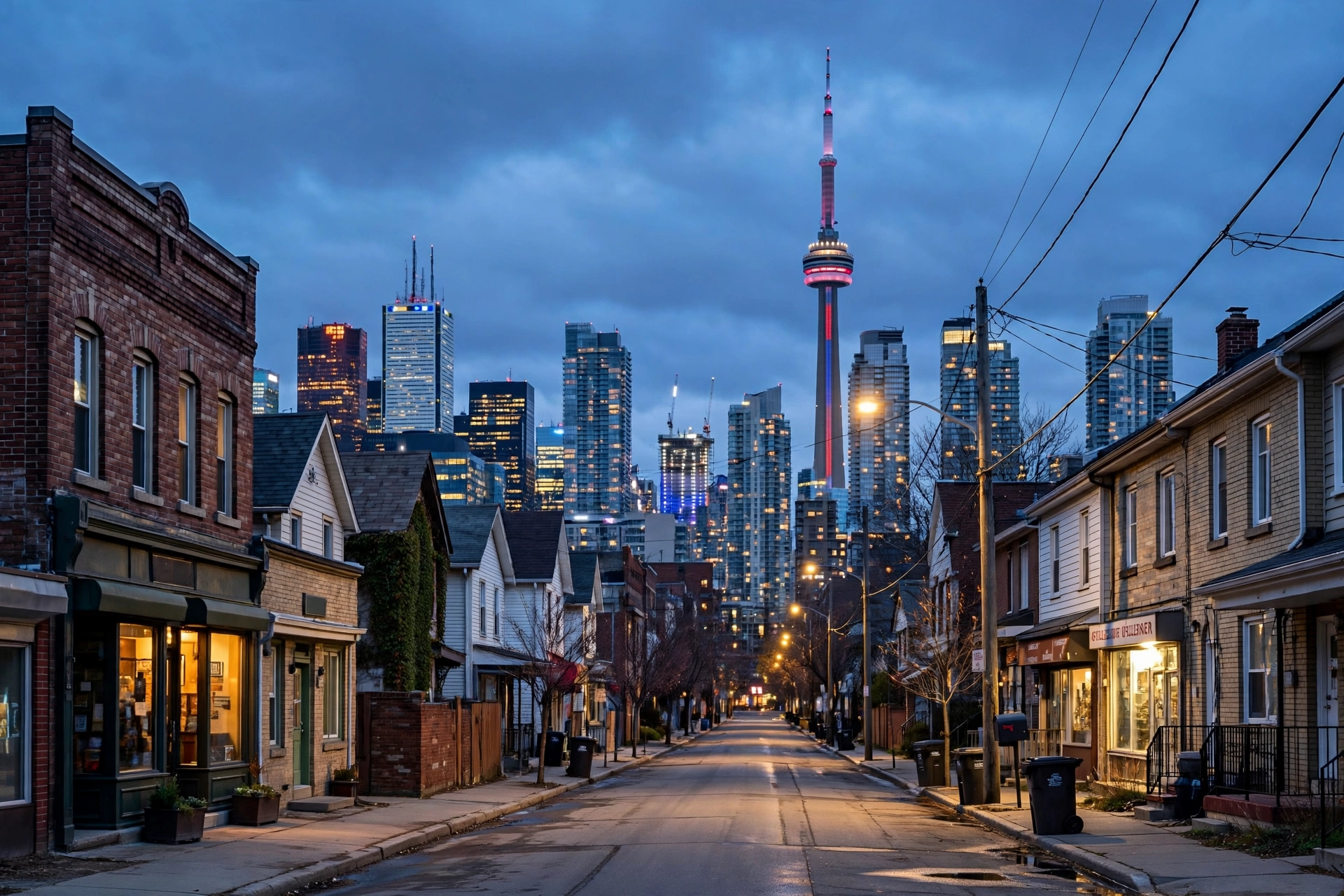
“Canada is no longer the dream people think it is.”
That is how one Jamaican woman put it in a video that blew up online in May of this year. No long intro, no big production. Just a real woman talking about real life: the debt, the exhaustion, the loneliness, the feeling that working nonstop to pay bills in a cold country is not the freedom she signed up for.
Her words hit because they sounded like what plenty of people in our community have been whispering for a while now. The dream did not disappear. It just got a lot more expensive. So let us talk about it properly, with the numbers in front of us.
The numbers are not playing
Start with rent, because rent is where most of the pay cheque goes to die. In the second quarter of 2026, the average one-bedroom condo apartment in the GTA rented for $2,273, and the average two-bedroom hit $3,013, according to the Toronto Regional Real Estate Board. Rents have softened a little from their 2023 peak, and September 2026 asking rents were around $2,150 for a one-bedroom, but let us not kid ourselves: $2,150 a month for a one-bedroom is still a salary and a half for a lot of people. A Winter 2025 renter survey found 70 per cent of Toronto renters spending more than 30 per cent of their income on rent.
Buying is no escape hatch either. The GTA average home price was $993,410 in August 2026, down 2.7 per cent from the year before but still firmly in fantasyland for most working families. The gap between what renters can afford and what a mortgage costs is about $600 a month, which is why people keep renting longer than they planned.
Then there is everything else. Inflation sat at 3.0 per cent in August 2026, stuck there for the third straight month. Grocery prices are now 29 per cent higher than they were in August 2021, and gas was up 22.8 per cent year over year in August thanks to elevated global oil prices. The Bank of Canada has held its rate at 2.25 per cent since December 2025, and markets are pricing in a real chance of a hike. Translation: the cost of everything is up, and the cost of borrowing is not coming down to rescue anyone.
Same storm, heavier rain
Here is where it gets specific to our people. These cost of living pressures are hitting everyone in the GTA, but they are landing harder on Black Canadians, and Jamaicans are the largest Caribbean community in the country, at more than 300,000 people per the census figures.
Statistics Canada found that 33.2 per cent of Black Canadians reported their household struggled to meet basic financial needs, compared with 16.6 per cent of non-minority households. A separate StatsCan analysis put financial difficulty at 35.8 per cent of Black Canadian households, against 15.6 per cent for non-minority households. That is more than double.
The wage side tells the same story. The State of Black Economics Report from Toronto Metropolitan University puts the median income of Black Canadians at $37,200, against $43,200 for non-racialized Canadians, even though median income grew 35.7 per cent between 2016 and 2021. Sixty-seven per cent of Black families sit in the bottom tier of households by wealth. StatsCan research has shown Black graduates earning 11 to 13 per cent less than non-racialized graduates early in their careers, and credential recognition remains a stubborn wall for Jamaican-trained professionals who end up in survival jobs well below their qualifications.
So it is not just that life got expensive. It is that our people walked into the expensive years earning less, saving less, and owning less. Same storm, heavier rain.
The hustle that never clocks out
This is the part you do not see on Instagram. The nurse doing doubles at two facilities. The PSW with a full-time job and a weekend cleaning gig. The young professional with a degree driving Uber at night because the salary does not stretch to rent and remittances.
Daily Bread Food Bank’s latest Who’s Hungry report makes it impossible to look away: 4.1 million food bank visits in Toronto last year, a 340 per cent increase since 2019, with one in 10 Torontonians now relying on food banks. Nearly half of the survey respondents had at least one employed person in the household, and 57 per cent held a postsecondary degree or higher. Having a job and an education no longer protects you from hunger in this city. That sentence should shock us every time we read it.
And the strain goes beyond money. The viral video that started this conversation was really about mental health as much as debt: the loneliness of being far from the village, the grey winters, the grind that leaves no time for the actual life the grind is supposed to fund. Plenty of immigrants and longtime residents are silently struggling, and the culture of “mi soon forward” keeps a lot of pain quiet.
The remittance squeeze nobody talks about
There is one more layer that makes the Jamaican experience different from the average Toronto renter, and it is the money going the other way. Jamaica is one of the most remittance-dependent economies in the world, and for many in the diaspora, sending money home is not charity, it is obligation. School fees for a nephew. A barrel at Christmas. Help with a roof after a storm.
That obligation does not pause because Toronto rent went up. So a lot of people are being squeezed from both ends: Canadian bills demanding more, and family back home still counting on the same support. It is a beautiful thing about our culture, and right now it is also an expensive one. Nobody wants to say it out loud, but some people are quietly reducing what they send and carrying the guilt, or working a second job specifically to keep the barrels flowing.
Where do we go from here?
Let us be honest: no single article is going to fix inflation, rent, or the wage gap. But naming the thing is where the fixing starts, and this community has always been better at surviving than the statistics suggest.
A few things are worth doing right now. If you are drowning, say so early. Talk to your bank about hardship options before you miss payments, check what community organizations and mutual aid groups in the GTA can help with, and know that food banks exist for working people too. If you are in a position to mentor, share the real financial playbook with newcomers instead of the highlight reel, because too many people arrive with the old version of the dream and no warning about the new price tag. And at the ballot box, which Toronto gets to use again on October 26, affordability is not abstract. It is rent, groceries, and the wages underneath them. Vote like you live here, because you do.
The dream is not dead. But it has changed, and it is time our conversation about it changed too. Canada is still home for hundreds of thousands of Jamaicans. The question is not whether we belong here. It is whether this country is going to make it possible to actually live here, not just survive here.
Sources
- Toronto Regional Real Estate Board, Q2 2026 Rental Market Statistics: average condo apartment rents $2,273 (one-bedroom), $3,013 (two-bedroom). https://trreb.ca/wp-content/files/market-stats/rental-reports/rental_report_Q2-2026.pdf
- Moving2Canada, Toronto rent data, September 2026: median one-bedroom asking rent $2,150. https://moving2canada.com/planning/destination-guides/toronto/how-much-is-rent-in-toronto/
- TRREB August 2026 Market Watch via viewhomes.ca: GTA average sale price $993,410, down 2.7 per cent year over year. https://www.viewhomes.ca/blog/toronto-real-estate-market-statistics/
- TRREB 2026 market outlook: renter households face a gap of nearly $600 per month between affordable and required mortgage payments. https://trreb.ca/gta-home-sales-and-prices-expected-to-remain-stable-in-2026-amid-ongoing-affordability-pressures/
- Statistics Canada via Morningstar/Reuters, September 2026: CPI up 3.0 per cent year over year in August 2026; grocery prices 29.0 per cent higher than August 2021; gasoline up 22.8 per cent. https://global.morningstar.com/en-ca/economy/cpi-shows-inflation-is-contained-elevated-heres-what-that-means-interest-rates
- Statistics Canada: 33.2 per cent of Black Canadians in households challenged to meet basic financial needs, versus 16.6 per cent of non-minority households. https://www.investmentexecutive.com/news/markets/black-canadians-face-greater-financial-challenges-statscan/
- Statistics Canada via Seymour Management Consulting: 35.8 per cent of Black Canadian households reported difficulty meeting basic financial needs, versus 15.6 per cent for non-minority households. https://www.investmentexecutive.com/news/markets/minority-households-twice-as-likely-to-face-financial-hardship-statscan/
- State of Black Economics Report 2025 (Toronto Metropolitan University): Black median income $37,200 versus $43,200 for non-racialized Canadians; 67 per cent of Black families in bottom wealth tier. https://www.torontomu.ca/content/dam/diversity/reports/state-of-black-economics/DI-FSC_State-of-Black-Economics-Report-2025.pdf
- Daily Bread Food Bank, Hunger Action Month 2026: 4.1 million food bank visits last year, up 340 per cent since 2019; 1 in 10 Torontonians rely on food banks; 46 per cent of respondents had an employed household member. https://www.dailybread.ca/blog/hunger-action-month-2026/
- 2021 Census via Wikipedia: Jamaican Canadians numbered 249,070, about 30 per cent of Black Canadians; 2016 ethnic origin count 309,485. https://en.wikipedia.org/wiki/Jamaican_Canadians
- Linda Ikeji’s Blog, May 2026: Jamaican woman’s viral video on debt, stress, and mental health in Canada. https://www.lindaikejisblog.com/2026/5/acanada-is-no-longer-the-dream-people-think-it-isa-a-jamaican-woman-opens-up-on-struggling-with-debt-stress-and-mental-health-abroad-2.html


Get the next guide first. Join the Yardie Dispatch.



Be the first to comment. Start the conversation!