
You knew it was time to go home when the streetlights buzzed on. Not before. Before that, the street belonged to us.
Nobody owned a console. Nobody needed a ride anywhere. The whole afternoon ran on chalk, a tennis ball and a pocket of marbles. If you grew up Caribbean, whether that street was in Kingston or Scarborough, you know exactly what I mean. The games were free, the rules were argued in real time, and the whole neighbourhood was in on it.
This is Sunday Reminisce, our new weekly feature on the things we used to do as kids. We start where every childhood started: outside.
The street was the playground
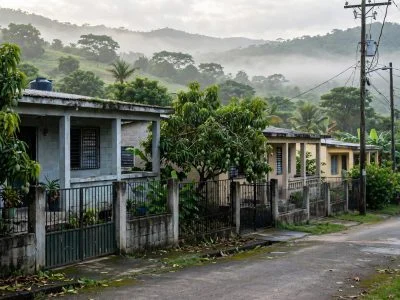
The street was not just where you lived. It was the venue, the clubhouse and the babysitter all at once. After school and after chores, the road filled up. Little ones played near their own gate. Bigger kids claimed the wider stretch. Somebody’s grandmother watched from a verandah or a front window, which meant you were supervised and free at the same time.
Every game had the same ingredients: no money, no equipment you could not find or make, and rules that changed from one street to the next. The arguments about the rules were half the game.
Dandy shandy: no equipment, all drama
Dandy shandy is the one every Jamaican of a certain age remembers first. All you needed was a ball, usually a tennis ball that had seen better days, and two teams. One player stood in the middle while the others circled and threw. Dodge the ball and you stayed alive. Get hit and you swapped places, to the cheers and jeers of everybody watching.
The middle was a performance. You ducked, you spun, you talked trash to throw off the throwers. The game taught you timing, nerve and how to take a loss in front of an audience.
Ask three people for the rules and you will get four versions. That is the point. Dandy shandy belonged to whoever was playing it that day.
Marbles: a fortune in your pocket
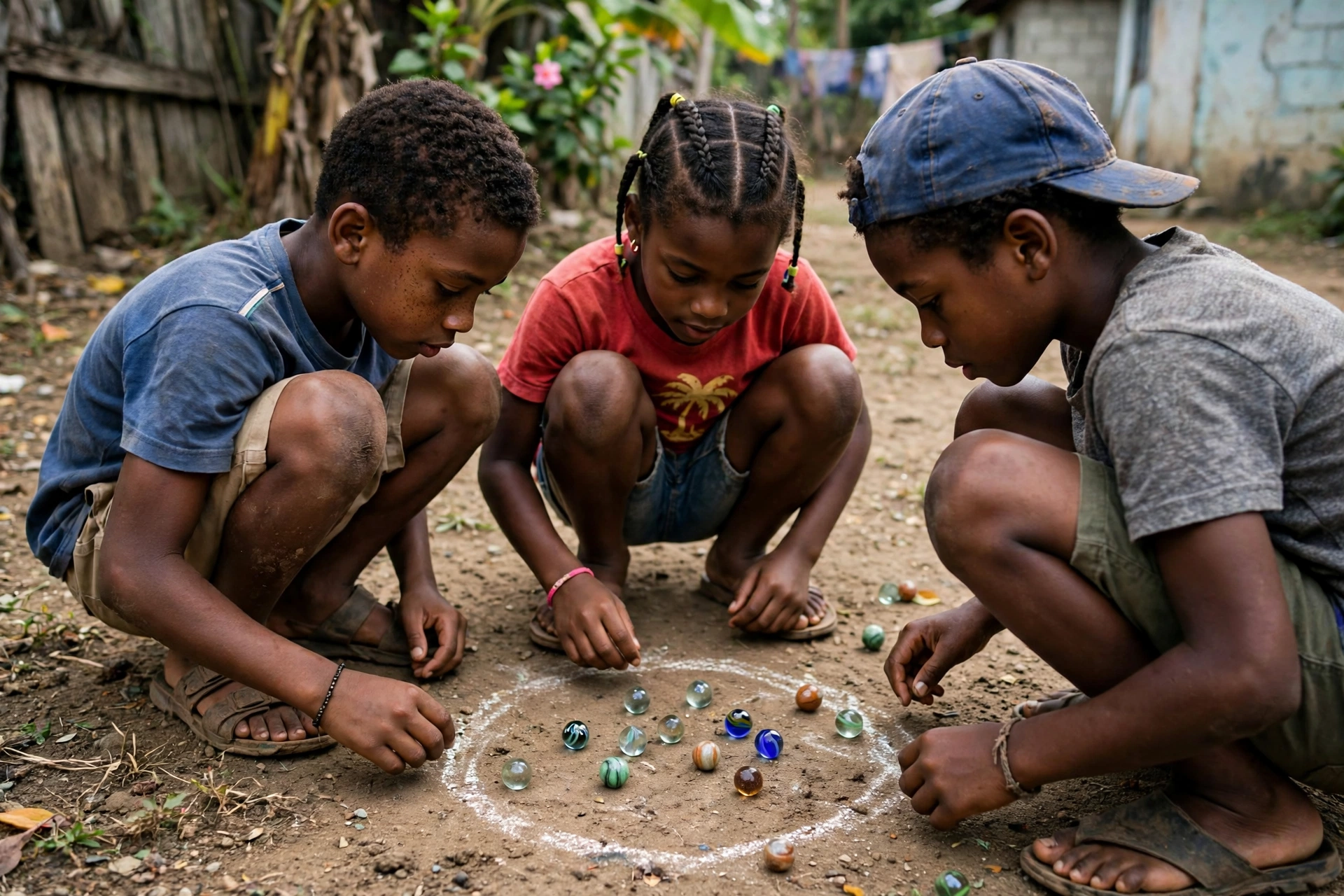
If dandy shandy was theatre, marbles was business. You carried your wealth in a pouch or an old sock: cat’s eyes, clearies, and if you were really blessed, a steely. The ring got drawn in the dirt, the marbles went in the middle, and you shot with your taw, knuckle down, exactly like the old saying goes.
Playing for keeps raised the stakes. Lose your best marble and you felt it. Win somebody’s prized cat’s eye and you walked home taller. Nobody’s parents bought a marble collection. You earned it, one ring at a time.
Jacks, hopscotch and the girls’ corner
The girls had their own corner of the street and it was just as competitive. Jacks needed a set of metal jacks and a small ball, and the whole game lived in your hands: onesies, twosies, threesies, scooping the jacks up before the ball bounced twice. Drop the set and the groan went up from the whole circle.
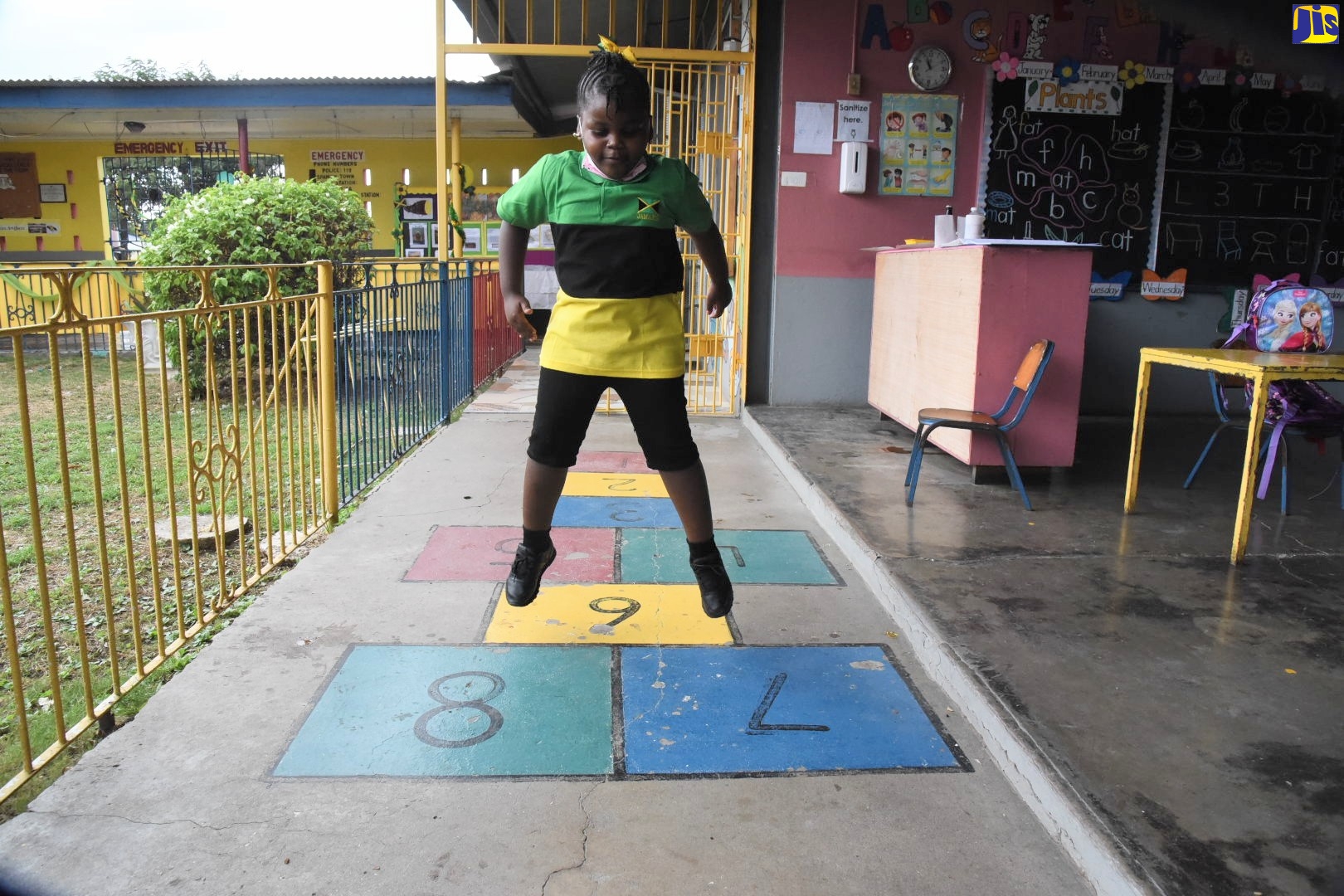
Hopscotch was chalk architecture. You drew the grid, found the perfect stone, and hopped the course without stepping on a line. Skipping came with songs everybody knew, and double dutch turned two ropes into a rhythm section. The boys who laughed at the girls’ games usually could not last one round of double dutch. Everybody knew it.
Road cricket and the board bat
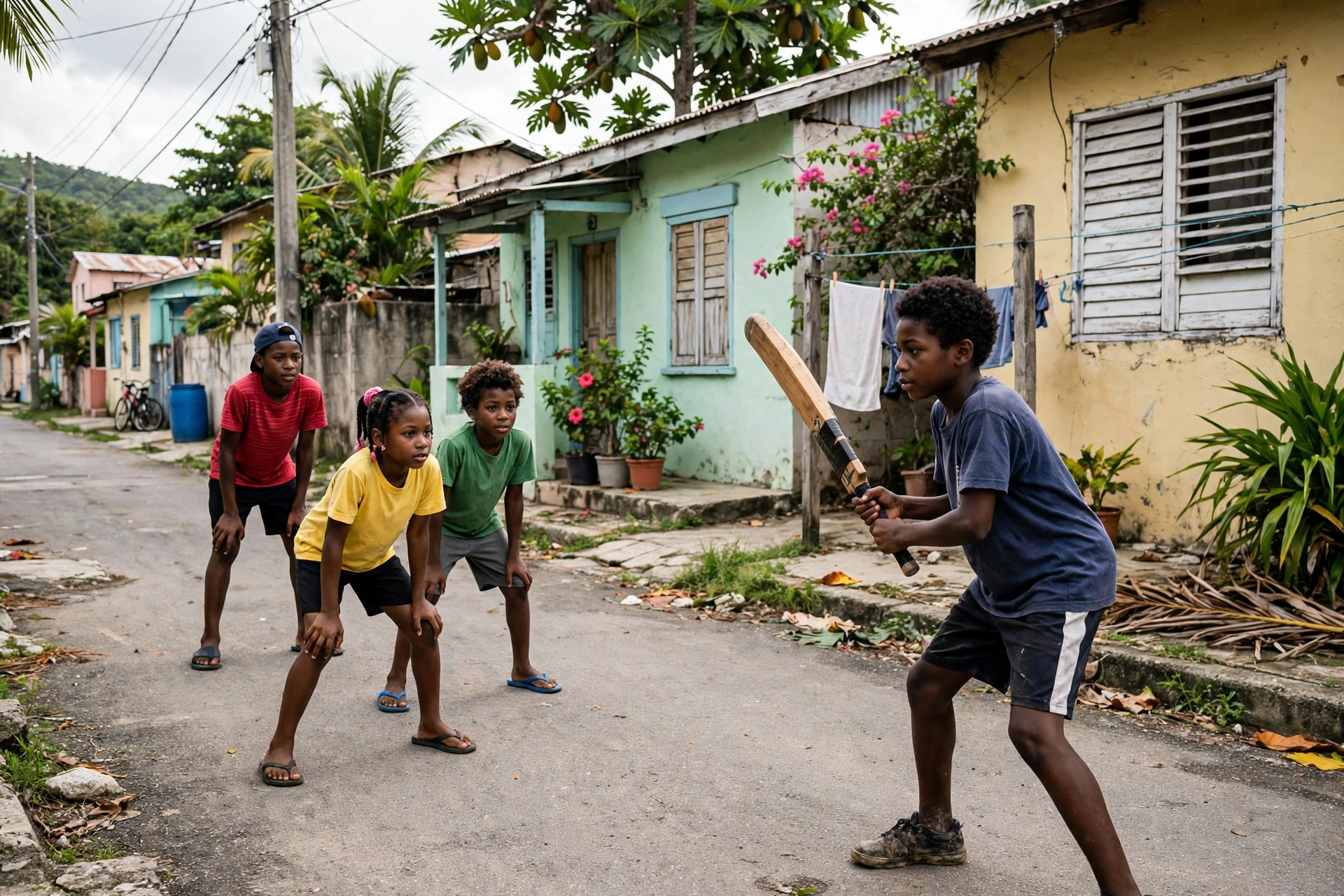
For the cricket-mad streets, the bat was often a plank shaped by somebody’s father or elder brother. The wicket was a garbage bin, a chalk mark on a wall, or a stack of stones. The ball was a tennis ball, sometimes taped up to swing a little more.
Road cricket had one sacred rule: car coming means game paused, not game over. Everybody scattered, the car rolled through, and the game picked up exactly where it left off. Arguments about outs were settled by the eldest person present, whose word was final even when it was clearly wrong.
What the street taught us
Here is what the games were really doing. They taught you to negotiate, because every match started with agreeing the rules. They taught you to lose in public and come back the next day. They mixed ages in a way school never did.
And they kept the neighbourhood close. When every window had an adult eye in it, the street raised the kids together. You did not need a playdate. You needed to step outside.
If this one took you back, the Sunday Morning Briefing lands every Sunday at 10 AM with more of it. Sign up at canadianyardie.com/#newsletter.
Then vs now: where did the games go?
The games did not die all at once. Screens got better, schedules got tighter, streets got busier, and parents got more afraid. Play moved indoors and got supervised by adults with clipboards. Something real was lost: the unsupervised hours where kids figured things out themselves.
But the games are not gone. They show up at family barbecues, at church grounds, at Caribana weekend picnics, in schoolyards where a teacher still draws a hopscotch grid. In Toronto, the neighbourhoods that raised a generation of Caribbean kids still carry that memory, as explored in Scarborough or the West End? Toronto’s Caribbean Culture Belongs to Both, and the organizations holding it down for the next generation are listed in The Community Directory. And when the game ended, the patty run began, ranked in The Great GTA Patty Ranking.
The best thing you can do with a memory like this is pass it on. Teach a child dandy shandy. Draw a hopscotch grid. Let them argue about the rules.
Your turn
What was your street’s game? Were you a dodger, a marble shark, or a double dutch champion? Tell us your version in the comments, or tag @canadianyardie on Instagram and TikTok with your street game memory. The best ones will get quoted in a future Sunday Reminisce.
And if you want Sunday Reminisce in your inbox every week, join the Sunday Morning Briefing at canadianyardie.com/#newsletter. Sunday Reminisce lands at 9 AM, the Briefing follows at 10 AM.
FAQ
What is dandy shandy?
Dandy shandy is a Jamaican street game played with a ball and two teams. One player stands in the middle while the others throw the ball at them. Dodge and you stay in. Get hit and you swap places. Every street played its own version of the rules.
Did Caribbean kids in Toronto play the same street games?
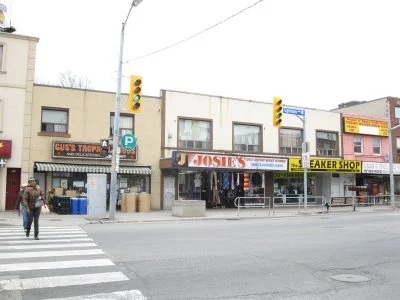
Yes. The games travelled with families across the ocean and onto Canadian sidewalks, especially in neighbourhoods like Little Jamaica on Eglinton West and across Scarborough. The rules adapted to new streets, but the games stayed the same.
Where can kids play these games in Toronto today?
Schoolyards, community centres, church grounds and family gatherings are where the games survive. The Community Directory on this site lists Caribbean organizations across the GTA running youth and community programs.

Get the next ranking first. Join the Yardie Dispatch.


Be the first to comment. Start the conversation!