
The Editor’s Take
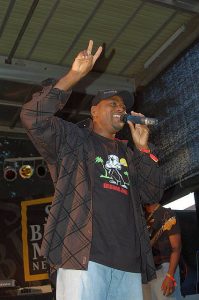
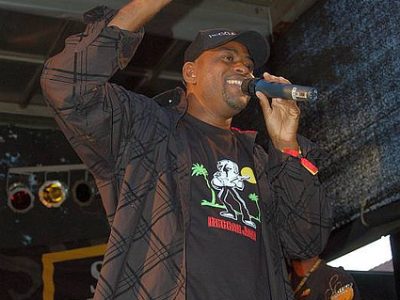
He got his name from a Toronto soca DJ, a shirt with a bottle printed on it, and a question about the ladies. Twenty years later, Greg “White Wine” Smith is still living up to it, one fete at a time.
White Wine is the first artist to say yes to CanadianYardie’s On the Radar series, and he makes an easy launch pick. His story runs the full diaspora map: hip hop roots in Toronto, soca discovered in 2005, years living in and out of Trinidad, and stages across Grenada, Toronto, New York, Washington DC, Miami and beyond. Along the way he has shared stages, produced for and collaborated with Problem Child, Allison Hinds, Fadda Fox, Mr. Killa, Lavaman, Berbice, Brotha B, Luni Sparks & Electrify and Scrappy.
Then life happened. He stepped away from the business for about ten years to raise his children. Now he is back in a scene that has changed, and his answer to the hardest question we asked him, what it means to be a white Canadian carrying a Trinidad-born sound in 2026, is exactly the kind of honesty this series was built for.
The mission is unchanged: help make soca a truly global genre. Not just carnival music, but a culture and a sound built to make people move, connect, celebrate and feel good. Start with his latest single, “Wine Wit U,” produced by Grenada’s Wave Forge Studios. Then meet the man.
For someone hearing the name White Wine for the first time, who are you and where does the name come from?
Most people just call me Wine. The name came from the fact that A, I’m white, and B, I can wine. It was coined by Dr. Jay, probably Toronto’s most well-known soca DJ, back in the mid-2000s. One night I was wearing a shirt with a bottle on it. He asked if any ladies liked some “white wine,” and that was pretty much it. The name stuck for life.
Tell us the story behind “Wine Wit U.” Where were you when it came together?
“Wine Wit U” was produced by a Grenadian production company called Wave Forge Studios. They sent me the riddim and it was one of those moments where you immediately feel a sense of urgency to write and sing to it. I heard the riddim over WhatsApp and basically ran to my computer to record a demo.
I like to write my songs while playing the potential video in my head, and with this one I was trying to capture that moment when you see the most beautiful woman in the fete. She is wining up herself, everybody is a little afraid to approach her, but you build up the courage to make your attempt. You slip in behind her, she pushes back, and that is the moment you know you only want to wine with her. I think that is relatable to most feters at some point. That is probably how most people end up getting married, haha.
Soca was born in Trinidad. What’s it like carrying that sound from Canada? How does being based here shape your music?
I have spent many years living in and out of Trinidad, trying to make music and honestly just immersing myself in the culture as a visitor. A lot of that time was successful in different ways, but ultimately I never quite broke through the way I wanted to. I took about ten years away from the business to raise my children, and now I am back. The world has changed quite a bit since I was last doing this seriously.
When I originally got involved, the culture was pretty open to a white Canadian coming into the space and seeing what he could do. There was an invitation to participate. Now, I think people are understandably more conscious of appropriation versus appreciation, and that makes complete sense to me. It should. How many times do you get burned before you stop putting your hand in the fire?
For me, the answer is not to complain about that. It is to show that I am here for the right reasons, that I respect the culture, that I study the music, and that I am willing to put in the work. Being based in Canada also makes it harder to get the music heard directly in the Caribbean. Toronto is not always known for supporting its own artists either, but I look at that as a challenge. I don’t expect anybody to pull me up. I have to build something strong enough that people want to pull themselves toward it.
What does the Canadian carnival scene, Toronto especially, mean to you as an artist?
The support here is tricky. I don’t know the scene the way I used to. Back in the day when I called people, they picked up. I don’t have that same network anymore, so I am basically working my way back in.
But I have really enjoyed watching the scene grow. To me, it moves at a glacial pace sometimes, but you can clearly see where the pioneers have carved paths for other people to move through. I am speaking specifically about the music here. On the other side of that, I think Toronto has one of the healthiest mas-building communities outside of the Caribbean. It is highly competitive, but there is a genuine love for soca and carnival culture here that, in my experience, is pretty much unrivalled outside of the diaspora.
Which artists shaped your sound? Give us one soca legend and one wild card.
The list would be ridiculously long. I am a child of the music, the history and the culture, and I study all of it. If I had to pick, I would say I was fortunate enough to produce for Mr. Killa and Brotha B, two of my favourite voices in the Caribbean. The rasp. I have been searching for that in my own voice for years. Being able to sing a note while maintaining that fry is incredible to me. I am not sure if that technically counts as legend status, but that is my truth.
For the wild card, I would have to say anything Wu-Tang. I grew up rapping, and Method Man was my idol. I used to try to rap like him until my own voice eventually came out. But the swagger, the cadence, the style, the way the words sit in the pocket, all of that has been part of my writing and singing journey. You can hear the hip hop influence in what I do, even though I am firmly rooted in soca now.
What’s the hardest part of being an independent soca artist in Canada right now?
For me personally, it is getting out. I am not able to get out and touch the people as much as I would like to. I know that if I could get on the ground, perform more, meet people and build those relationships consistently, things would be completely different for me. Soca is a people-first music. You can make the record in your bedroom, but eventually you have to get in front of people and let them feel it.
What’s next? Any releases, shows, or plans for the coming carnival season we should know about?
I am preparing for Spicemas 2027. That is the aim. I am happy to touch down in Trinidad this year, but realistically I don’t think it is in the books. The bigger goal is to be there in 2028 and build properly toward it.
Last one, purely for vibes: when you’re not in the studio, where in Canada do we find you?
I live about an hour and a half outside Toronto now, so mostly you can find me fishing, hanging out with my kids, or in the studio producing, writing and recording. Basically, if I am not making music, I am probably trying to get away from everybody long enough to make some more music.
YouTube: White Wine on YouTube
Your Turn: Get on Our Radar
Are you a Caribbean or diaspora artist making noise from Canada? On the Radar is our recurring spotlight for independent artists with a Toronto or diaspora angle: a short written Q&A, an editor’s take, your music embedded in the piece and a push on our socials. No cost, no pay-to-play. Pitch us through the contact page and tell us your story.
All responses were provided by White Wine (Greg “White Wine” Smith) to CanadianYardie in October 2026 and lightly edited for clarity.


Hear the next drop before it hits the dance. Join the Yardie Dispatch.



Be the first to comment. Start the conversation!