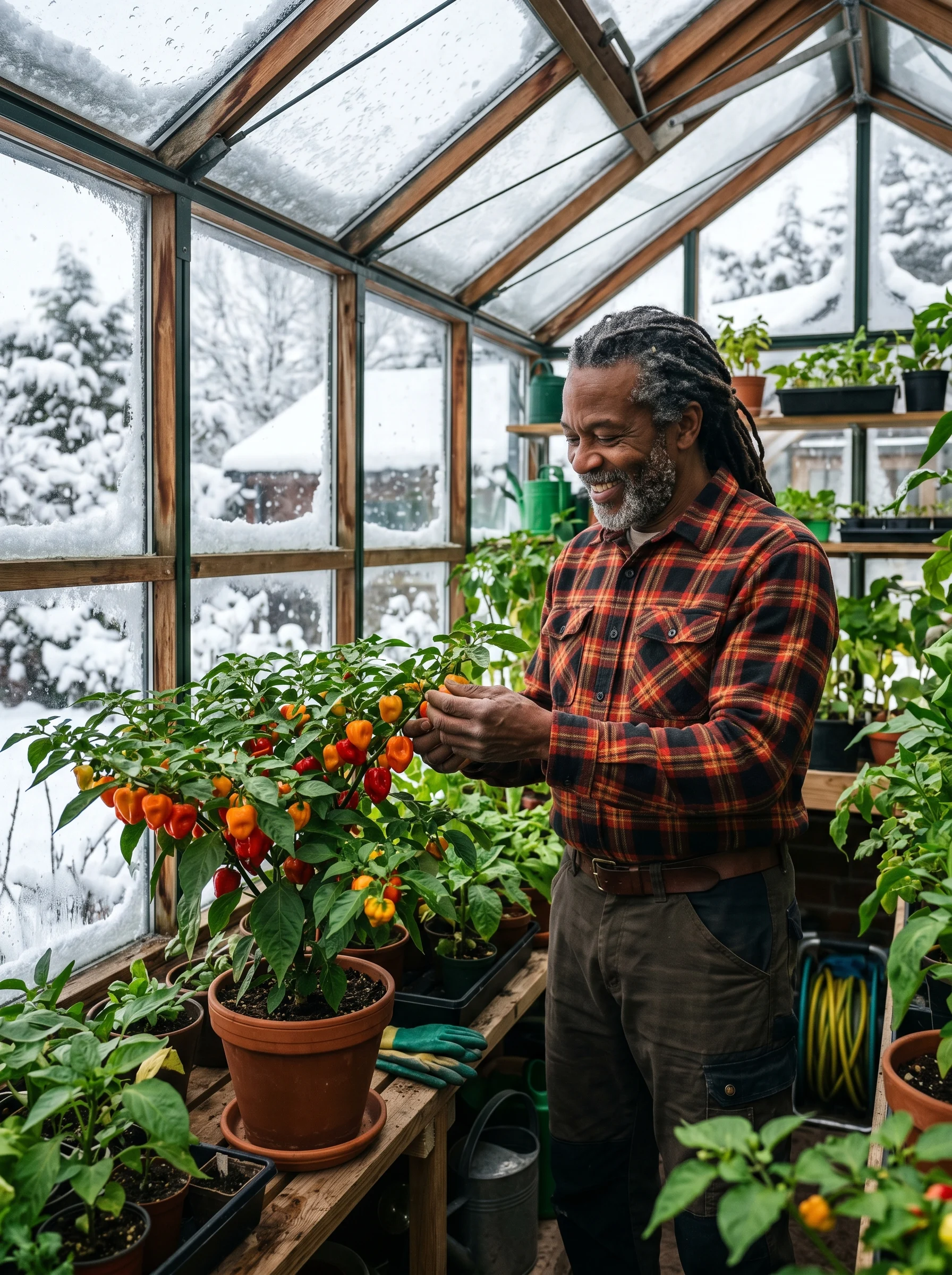

Outside, the wind is howling off Lake Ontario, driving a relentless sheet of February snow across the frozen plains of the Greater Toronto Area. The temperature is hovering at a bitter minus fifteen degrees Celsius, and the landscape is a monochromatic expanse of white and gray. But step through the heavy, insulated double doors of a commercial greenhouse on the outskirts of Brampton, and the world instantly transforms.
The air is thick, humid, and heavy with the unmistakable, earthy scent of damp soil and vibrant green life. The temperature is a balmy twenty-eight degrees. Above, high-intensity LED panels cast a brilliant, artificial Caribbean sun over rows of meticulously irrigated soil beds. And there, thriving in the dead of the Canadian winter, are the unmistakable crinkled, lantern-shaped pods of Scotch Bonnet peppers turning a fiery orange, sitting alongside lush, broad-leafed Jamaican Callaloo.
For decades, the Jamaican Canadian diaspora has accepted a quiet culinary compromise. To eat the food of “yard” meant relying on imports—produce picked prematurely to survive the long journey, or worse, resorting to the muted, metallic taste of canned goods. But a quiet revolution is taking root across Ontario’s agricultural belt. A new wave of Jamaican-Canadian farmers, agronomists, and greenhouse innovators are refusing to compromise. They are merging modern agricultural technology with ancestral knowledge to cultivate the tastes of the Caribbean right here in the Great White North, proving that cultural roots can thrive in any soil, provided you bring the heat.
The Cultural Weight of “Yard Food”
To understand why a farmer would go to the immense effort and expense of engineering a tropical microclimate in Ontario, you have to understand what these crops represent. In the Jamaican diaspora, food is not merely sustenance; it is the ultimate tether to identity. It is the language of nostalgia, comfort, and community.
Consider the Scotch Bonnet. It is the undisputed king of Caribbean chilies. While a jalapeño offers a polite sting and a habanero delivers an aggressive, singular burn, the Scotch Bonnet is a complex symphony of flavor. Clocking in anywhere between 150,000 and 325,000 Scoville Heat Units, it certainly brings the fire, but it is beloved for its underlying profile: a fruity, almost smoky sweetness that is the non-negotiable foundation of authentic jerk marinade, escovitch fish, and Jamaican patties. When you substitute a Scotch Bonnet with a lesser pepper, the dish loses its soul.
Similarly, Callaloo—the leafy green staple of the Jamaican diet—is more than just a vegetable. A Sunday morning breakfast of fresh Callaloo steamed with saltfish, onions, thyme, and a sliver of Scotch Bonnet, served alongside boiled green bananas and fried dumplings, is a weekly ritual that binds generations. For years, Canadian Yardies have made do with canned Callaloo, a soggy, olive-green shadow of the vibrant, robust fresh plant.
For the diaspora, relying on a fragile international supply chain means settling for lower quality, higher prices, and frequent shortages. The push to grow these staples domestically is born out of a desire for food sovereignty—the right of a community to define and control its own agricultural and food systems.
Pioneers of the Frost-Free Tropics
The history of Black farming in Ontario is rich, dating back to the early settlements of Black Loyalists and freedom seekers. Today, that legacy is being revitalized by entrepreneurs who view agriculture through the lens of cultural preservation and modern business.
Farmers like Hamer Hugh Phillips have made headlines for successfully growing Jamaican Callaloo in Brampton, while family-run operations like The Greenhouse Eatery have long offered diverse, heritage vegetables to the local community. These modern agriculturalists are not just hobbyists tending to summer backyard gardens; they are operating at a commercial scale, utilizing advanced greenhouse technology to outsmart the Canadian climate.
Operating a tropical greenhouse in Canada is an exercise in extreme environmental control. You cannot simply throw seeds in the dirt and hope for the best. To trick a Scotch Bonnet plant into believing it is thriving in the parish of St. Elizabeth rather than a snowy suburb of Toronto requires meticulous engineering.
Engineering the Sun
The biggest hurdle is not just the cold, but the lack of light. The Canadian winter brings short, gray days that are entirely insufficient for tropical crops. To counter this, diaspora greenhouse farmers utilize advanced LED grow light systems. These lights are calibrated to emit specific spectrums of light—blue for vegetative growth (perfect for Callaloo) and red for flowering and fruiting (essential for peppers). During the darkest months, these lights run for up to sixteen hours a day, simulating the relentless, life-giving power of the Caribbean sun.
Controlling the Climate
Peppers are notoriously fussy about temperature. If the soil temperature drops below 15°C (59°F), the plants will stunt, drop their blossoms, and refuse to fruit. Greenhouse operators use a combination of radiant floor heating, forced-air natural gas heaters, and thermal screens to trap heat.
But it’s not just about the air temperature; the roots need to stay warm. Many growers utilize seedling heating mats and specialized potting mixes designed to retain warmth, keeping the root zone at a cozy 25-29°C (78-85°F). Humidity is also carefully monitored. Too dry, and the plants wither; too humid, and fungal diseases like powdery mildew can decimate a crop in days. It is a delicate, high-stakes balancing act of automated ventilation and irrigation.
The Art and Science of the Scotch Bonnet
Growing Scotch Bonnets commercially in Canada is a masterclass in patience. Unlike quick-yielding salad greens, these peppers demand a long, luxurious growing season.
The journey begins deep in the winter. Seeds must be started indoors six to eight weeks before they ever see their final planting bed. The germination process alone can take up to three weeks, requiring constant, coddled warmth. As the seedlings grow, they are carefully transplanted into progressively larger containers to prevent them from becoming root-bound.
The real challenge comes when coaxing the plant to fruit. Scotch Bonnets are heavy feeders, requiring nutrient-dense soil rich in phosphorus and calcium.Growers must carefully manage nitrogen levels; too much nitrogen will result in a massive, beautiful, leafy green bush that produces absolutely no peppers. It requires a precise application of bloom-stage fertilizers, often supplemented with fish emulsion and Epsom salt foliar sprays, to trigger an abundant yield.
When the harvest finally comes, it is a triumph of agricultural engineering. The peppers emerge green, slowly maturing into their vibrant yellow, orange, or fiery red hues. The sweetness and vitamin C content skyrocket as they change color. Biting into a freshly harvested, Canadian-grown Scotch Bonnet in the middle of January is a revelation—the heat is immediate, the fruitiness is crisp, and the flavor profile is indistinguishable from a pepper bought at Coronation Market in Kingston.
Callaloo: The Resilient Green
While Scotch Bonnets require coddling, Callaloo is a survivor, provided it has enough heat. A member of the amaranth family, it is a fast-growing, vigorous plant that responds incredibly well to controlled environment agriculture.
In a greenhouse setting, Callaloo is often grown in raised soil beds or via hydroponics—a method of growing plants in a water-based, nutrient-rich solution without soil. Hydroponic Callaloo grows astonishingly fast, allowing farmers to harvest multiple yields from the same crop throughout the winter.
The difference between a freshly harvested bunch of greenhouse Callaloo and its canned counterpart cannot be overstated. Fresh Callaloo has a sturdy texture and an earthy, slightly nutty flavor that holds up beautifully to steaming and sautéing. By growing it locally, farmers are not just providing a product; they are restoring the dignity of a cultural dish that has been compromised by industrial processing for far too long.
Economic Empowerment and the Circular Economy
The impact of this agricultural movement extends far beyond the dinner table; it is a vital engine for economic empowerment within the Jamaican Canadian community.
For years, the millions of dollars spent annually by the diaspora on cultural groceries flowed outward to international exporters and massive, disconnected grocery conglomerates. The rise of local, Black-owned greenhouses intercepts that capital, creating a circular economy. When a Jamaican-Canadian family in Markham buys fresh Scotch Bonnets and Callaloo grown by a Black farmer in Niagara or Brampton, that money stays within the community.
This movement is creating jobs, fostering agricultural education, and supplying local Caribbean restaurants, bakeries, and independent grocers with superior, locally sourced ingredients. Furthermore, many of these farms have adopted Community Supported Agriculture (CSA) models, offering weekly subscription boxes of fresh “yard food” directly to consumers, bypassing the traditional grocery store middlemen entirely.
These farms are also becoming cultural hubs. They represent spaces of ownership and pride, where younger generations of Jamaican-Canadians—who may have never set foot on the island—can connect with their heritage through the soil. They are proving that agriculture is not just a relic of the past, but a viable, high-tech, and lucrative future.
Looking to the Future: Expanding the Harvest
The success of Scotch Bonnets and Callaloo is just the beginning. As greenhouse technology becomes more accessible and energy-efficient, the ambitions of diaspora farmers are growing. Experimental crops are already being tested. Farmers are exploring the viability of cultivating Jamaican thyme, scallions, sorrel (hibiscus sabdariffa), and even gungo peas under glass.
There are challenges ahead, to be sure. The capital required to build and maintain commercial greenhouses is immense, and navigating the complexities of agricultural zoning, energy costs, and systemic barriers in farm financing remains difficult for Black entrepreneurs in Canada. Yet, the resilience required to overcome these hurdles is woven into the very fabric of the diaspora.
The winter harvest in Ontario is more than an agricultural curiosity; it is a profound statement of arrival and permanence. It says that the Jamaican Canadian diaspora is no longer just visiting, no longer just making do with what is available. By taking control of their food sources, these farmers are ensuring that the culture, the heat, and the unmistakable flavor of Yard will continue to thrive, even when the snow falls.
This story tracks the winter harvest: growing scotch bonnets and callaloo in the snow with fresh updates and context for readers.



Be the first to comment. Start the conversation!