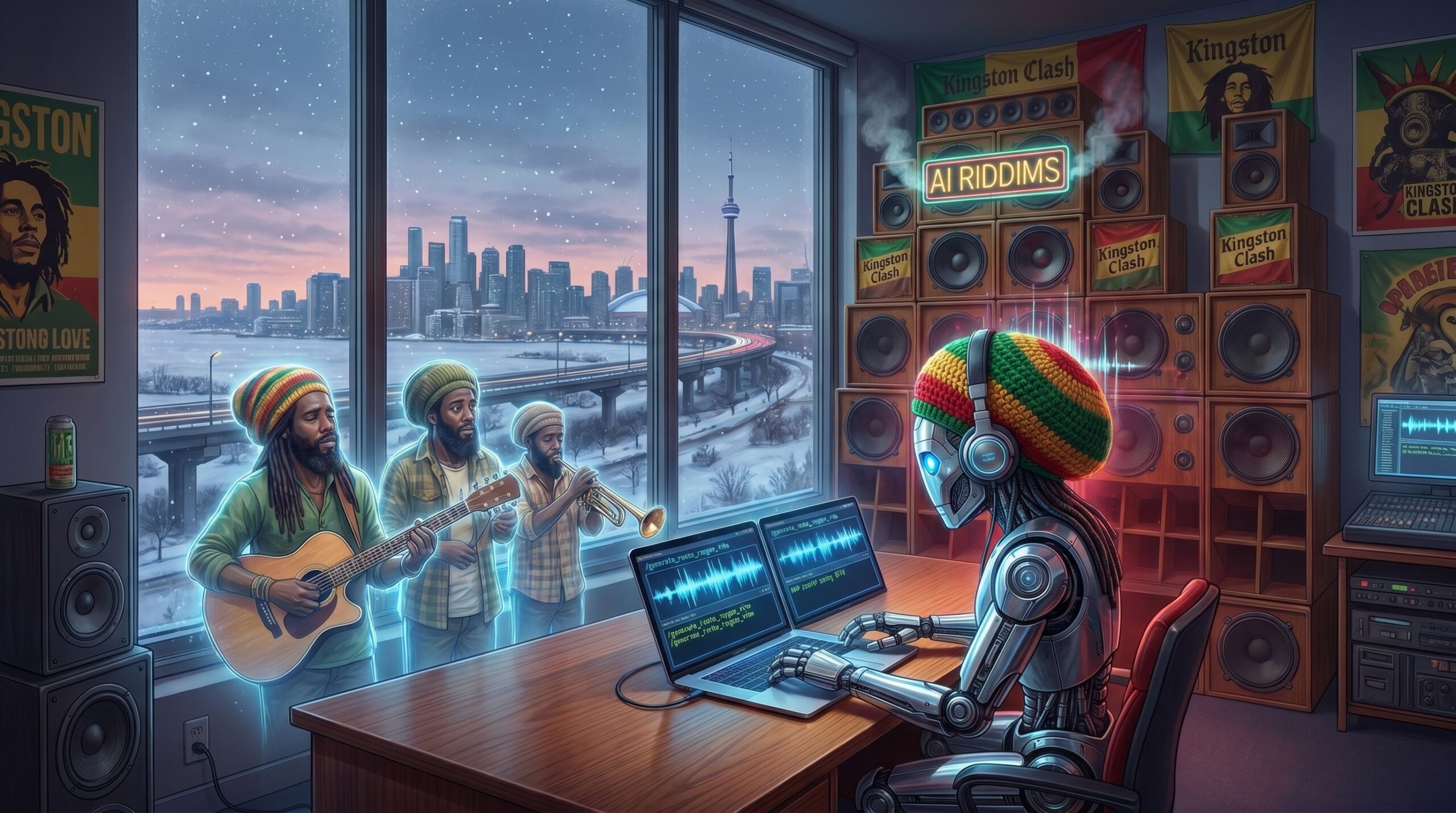

AI Riddims The Digital Evolution of the Kingston Sound
Picture a classic Kingston recording studio in the late nineteen seventies. You have got the heavy sweet scent of herbs thick in the air the massive analog mixing boards lighting up like a spaceship and legendary musicians laying down heavy tracks on physical magnetic tape. Fast forward to the nineteen eighties and the digital revolution hit the island hard. The legendary Sleng Teng riddim proved once and for all that a simple computerized preset on a cheap keyboard could completely shut down an entire street dance and change the global trajectory of music.
Welcome to May 2026. The sweet scent in the studio might be exactly the same but those massive heavy mixing boards are mostly gone. They have been replaced by sleek laptops glowing dual screens and the newest most highly controversial member of the band. Artificial Intelligence.
The bridge between Toronto and Kingston has always been paved with heavy basslines and sharp lyrics. But right now a massive technological shift is happening. Toronto based producers sitting in high rise condos overlooking the Gardiner Expressway are using advanced AI tools to generate authentic sounding reggae and dancehall riddims. And the craziest part of this entire phenomenon is that these tracks are quietly topping the streaming charts in both the 6ix and the 876.
According to the recent HotBot Music Analysis covering the digital evolution of Caribbean music generative AI is no longer just a weird novelty or a fun internet gimmick. It has become a foundational production tool. We are looking at exactly how the diaspora is using this technology why the purists are absolutely furious and how a machine learned to catch the holy spirit of the Jamaican sound.
The 6ix to 876 Digital Pipeline
Toronto has always had a beautifully unique Caribbean flavor. The city breathes dancehall from the summer festivals to the underground winter basements. But the economic reality of 2026 is harsh. Professional studio time is incredibly expensive in Canada. Assembling a full live band with a tight rhythm section and a blazing horn section to get that authentic vintage roots sound costs an absolute fortune that most independent creators simply do not have.
Enter the AI riddim generator. A young ambitious producer in Brampton can now open their laptop and type a few carefully worded text prompts into a music generation program. They can ask the AI to create a heavy drum and bass groove in the style of Sly and Robbie add a digital brass section that sounds indistinguishable from real physical instruments and mix it all with a vintage dub echo reminiscent of King Tubby.
Within minutes not hours or days they have a completed fully mastered instrumental track ready to be sent via WhatsApp to an eager vocalist waiting in Portmore or Montego Bay.
This digital pipeline is moving at lightning speed. It allows Canadian Yardie creatives to bypass the traditional expensive studio gatekeepers and flood the global market with incredibly high quality music. The technology has gotten so incredibly sophisticated that fans dancing in a crowded club in downtown Toronto or vibing at an outdoor street party in Kingston have absolutely no idea that the heavy bassline rattling their chest was literally coded by an algorithm yesterday afternoon.
Prompt Engineering is the New Beat Making
Making music with AI is not as simple as pressing a single magic button. It requires a completely new skill set called prompt engineering. The best producers in the GTA are not just asking a computer to make a reggae beat. They are feeding the software decades of classic rocksteady early dancehall and roots reggae to train its digital brain on the exact swing pocket and syncopation of the Jamaican sound.
They have to know the musical vocabulary. They have to tell the AI exactly where to drop the kick drum how to delay the snare and how to weave the rhythm guitar so it skips perfectly over the bass. In a weird way the producers who are the most successful with AI are the ones who have the deepest historical knowledge of analog Jamaican music. They are using futuristic tools to perfectly recreate the vintage golden era sounds that fans are currently craving.
The Big Debate AI Versus Authenticity
But this massive technological leap brings us to the ultimate cultural showdown. Can a machine ever truly understand the soul of Jamaican music? If you ask the veteran sound system selectors the guys who actually dictate what gets played at the massive outdoor sessions the answers are completely split down the middle.
On one side of the argument you have the strict musical purists. They passionately argue that reggae is a deeply spiritual art form. It is built entirely on human emotion physical timing and the beautiful subtle imperfections that only happen when real human musicians play together in a shared room.
To the purists an AI generated bassline might sound technically perfect on a speaker but it completely lacks the spiritual weight the struggle the blood sweat and tears of the genuine Jamaican experience. They will look you dead in the eye and tell you that a computer can never truly feel the one drop rhythm because a computer does not have a human heartbeat. It cannot feel pain it cannot feel joy and therefore it cannot make real reggae music.
On the exact opposite side of the fence you have the pragmatists the hustlers and the younger generation of sound boys. They will very quickly remind you that people said the exact same negative things when drum machines and digital synthesizers first appeared decades ago. Traditional purists absolutely hated the early digital dancehall era when it started. They called it fake music. But that digital era completely revolutionized global culture and gave us some of the greatest hits of all time.
This new generation argues that AI is simply just another instrument. It is a modern tool just like a guitar or a drum kit. The soul of the track does not come from the software itself it comes from the human producer who curates the sound and the human vocalist who breathes real life fire and melody into the rhythm. If the track makes the crowd move if it makes the waistlines wine and if it brings joy to the party then the digital source of the beat simply does not matter.
The Business Side
Let us talk strictly about the money because at the end of the day the music business is exactly that a business. For an independent diaspora artist the AI revolution is an absolute financial game changer.
Traditional beat making requires buying expensive studio monitors renting soundproof spaces and spending weeks endlessly mixing and mastering individual tracks. Now a single producer can generate ten entirely different high quality riddims in a single rainy weekend in Ontario. This massive volume means more constant content for streaming platforms like Spotify and Apple Music. More tracks equal more algorithmic reach which translates directly into more streaming revenue hitting their bank accounts.
It also opens up massive lucrative opportunities for licensing and sync deals. If a Canadian television network or a corporate brand needs a generic upbeat reggae track for a summer commercial an AI producer can provide a royalty free custom option in seconds completely undercutting the expensive traditional music licensing libraries.
However this new money printing machine also creates a terrifying legal minefield. If an AI model is trained on the classic copyrighted works of legendary Jamaican artists who actually owns the rights to the brand new song it generates? Lawyers in both Toronto and Kingston are currently scrambling to figure out the intellectual property rules for this brand new digital wild west. The recent Island Music Conference spent days arguing over exactly how to legally protect human artists when a computer program can perfectly mimic their entire unique vocal style and rhythm pattern in just three clicks.
Where Do We Go From Here
The beautiful evolution of the Kingston sound has always been about pushing boundaries and breaking rules. Jamaican culture is inherently innovative and deeply resourceful. We have a long history of taking whatever tools are available to us whether it is an empty metal oil drum a discarded oversized sound system speaker or a brand new artificial intelligence algorithm and figuring out a genius way to make it completely our own.
The young producers currently sitting in Toronto are doing exactly what the diaspora has always done. They are adapting they are surviving and they are creating pure magic with the resources they have at hand. The AI riddim is not here to permanently replace the live traditional musician. It is here to rapidly expand the universe of what Caribbean music can sound like and who has the access to create it.
So the next time you are driving down the Don Valley Parkway or cruising along the palisadoes with the windows down blasting the latest massive summer anthem that connects the 6ix to the 876 take a second to really listen to that heavy bassline. Is it a human touching the physical strings or is it a perfectly programmed piece of brilliant code?
Honestly if the vibe is right the message is strong and the tune is incredibly sweet it probably does not even matter. The digital evolution is already here it is fully integrated and it sounds absolutely massive.
This story tracks ai riddims the digital evolution of the kingston sound with fresh updates and context for readers.




Be the first to comment. Start the conversation!