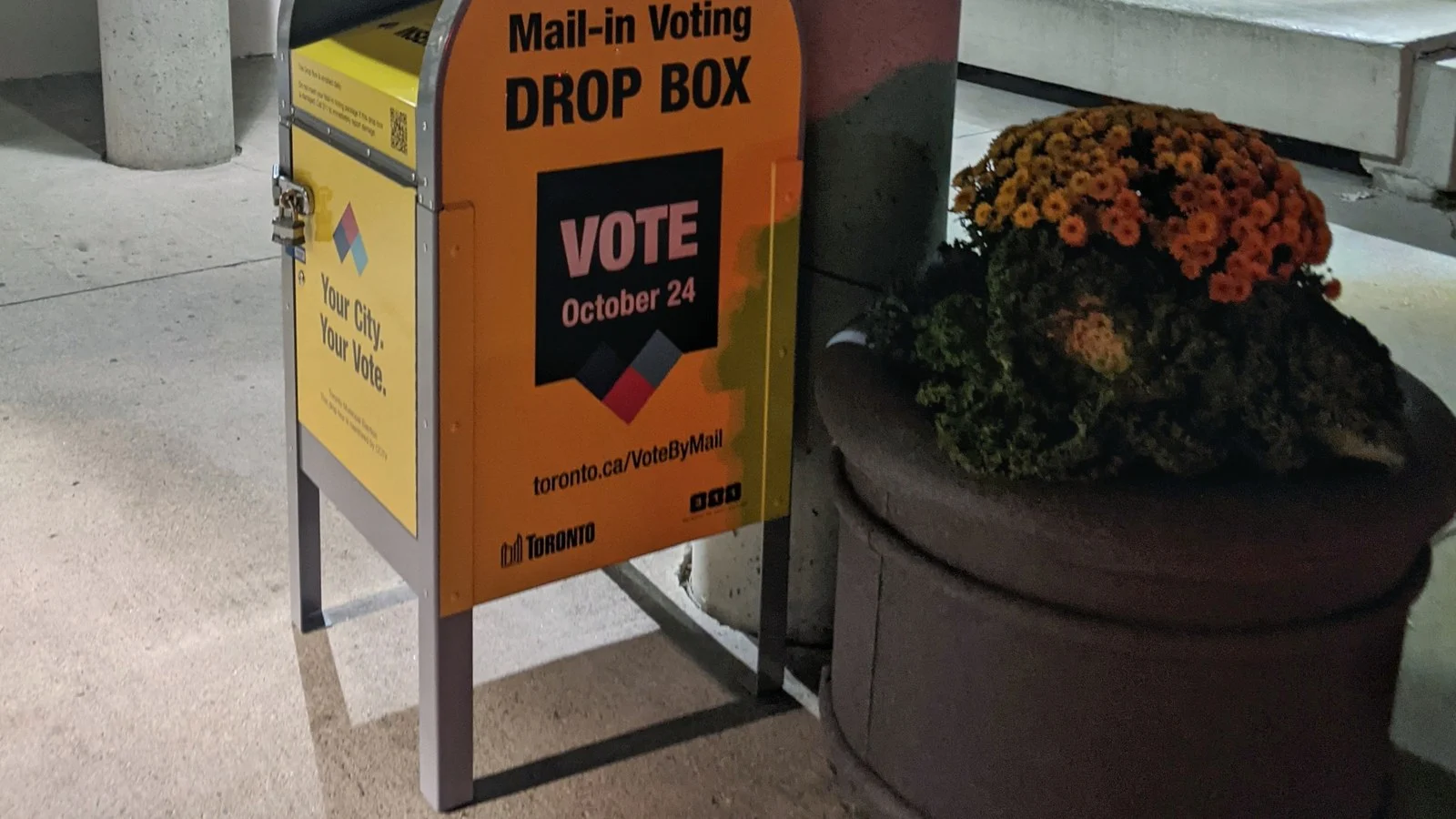
Brampton is about to pick its next city council on October 26, and a fresh Statistics Canada study says the people least excited about democracy might be the ones who show up anyway. That sounds like a contradiction. It is not. It sounds like home.
The study, “Taking the pulse: Perceptions of democracy in Canada,” dropped this week. The headline number is a rough one. Only 12 per cent of Canadians say they feel “very hopeful” about the way democracy works in this country. Another 71 per cent are a little or somewhat hopeful, and 17 per cent say they are not hopeful at all. That is nearly one in five Canadians who have basically checked out of the hope game.
But the age breakdown is where it gets personal for us. Among adults aged 25 to 44, a quarter are not hopeful at all: 24 per cent of 25-to-34-year-olds, 23 per cent of 35-to-44-year-olds. Flip the generational lens and the contrast is sharp. Only 10 per cent of Canadians 65 and older feel not at all hopeful, while 18 per cent of them feel very hopeful. The share who are extremely hopeful among the over-45 crowd runs between 12 and 18 per cent, compared with just 8 per cent for 25-to-34-year-olds and 10 per cent for 35-to-44-year-olds. Apart from the 15-to-24 group, every younger cohort feels less hopeful than the one before it.
Read that again. The generation now renting basement apartments in Brampton, driving for work across the GTA, and wondering if they will ever own a home here is the generation least hopeful about Canadian democracy. Nobody in our newsroom is surprised.
Here is the twist the Brampton Guardian report (Mike Pearson, October 2, 2026) pulled out, and it is the whole story. The hopeless are not the apathetic. StatCan found no direct link between a person’s hopefulness and whether they vote. Voting rates in recent federal elections looked basically the same whether a respondent felt extremely hopeful or not hopeful at all. And when it came to actually doing politics, the “not at all hopeful” crowd was the busiest of the bunch: 57 per cent of them had taken part in one or more political activities in the last 12 months, compared with 44 per cent of the hopeful ones.
That number deserves to sit with you for a minute. The people with the least hope are doing the most work. They sign the petitions, show up at the town halls, call their councillors, and argue in the group chats. Hope, it turns out, is not the fuel. Something else is.
If you are Caribbean, you already know what that something else is. Our parents and grandparents came from political cultures where nobody pretended the system was perfect. Jamaica’s politics have been a contact sport since independence: garrison constituencies, heated elections, turnout driven by loyalty and grievance more than optimism. Trinidad, Barbados, Grenada, the same story in different keys. You did not participate because you believed in the process. You participated because your parish, your neighbourhood, your people were on the line. Hopelessness about the system and engagement with the system were never opposites in the Caribbean. They were roommates.
That is exactly what this StatCan survey is picking up in the younger Canadian data, and Brampton is the city where the pattern lands hardest. This is one of the youngest big cities in Canada, one of the most immigrant-heavy, with a Caribbean population large enough to swing wards. The 25-to-44 band, the least hopeful in the country, is the age band that keeps Brampton running. These are the parents at the school council meetings, the people lining up at the advance polls, the ones sharing councillor candidate flyers in the neighbourhood WhatsApp groups. They are not hopeful. They are present.
It is worth noting what this study is actually measuring, because the details matter. The data comes from StatCan’s Survey Series on People and their Communities, collected between October 2022 and April 2024. That means the responses predate both the second Trump term and the Carney government, so this is a portrait of the Trudeau-era twilight, when housing costs were already crushing and public mood was already sour. StatCan also dug into trust in information sources and confidence in civic institutions, and the survey treated hope for democracy as its own question, separate from whether people bother to take part. That separation is the insight. The old assumption, the one civics classes teach, is that trust drives participation. The data says something more interesting: participation keeps going on fumes.
There is a lesson in that for anyone running for Brampton council this month. The voters you are courting in the Caribbean wards, the young families, the first-generation homeowners, do not need to be inspired. They need to be convinced you are worth their time, because they are giving you their time already, hope or no hope. The survey’s 57 per cent is a campaign manager’s dream and a candidate’s warning: these people will engage, and they will hold you to account.
There is also a mirror to hold up to the rest of us. For years the diaspora has carried a particular shame narrative about low civic participation, the idea that immigrants, especially Caribbean immigrants, do not show up. This study does not tell that story. It tells the story of a generation that does not believe the system loves them back and participates anyway. That is not apathy. That is duty, and it is older than Confederation.
So what do we do with this before October 26? We take the hopelessness seriously without romanticizing it. Young Bramptonians are telling StatCan that democracy, as it works in Canada, is not giving them much to hope for. That is a policy verdict on housing, on wages, on the cost of everything, and the candidates knocking on doors in Chinguacousy and Wards 7 through 10 should hear it as one. And we also take the participation seriously, because it is real and it is ours.
The Caribbean has never waited for hope to arrive before getting to work. Our grandparents voted in systems that shot at people for voting. Our parents built community associations in church basements while the city ignored their streets. Hope was a luxury. The work was mandatory. StatCan just put a number on it: 57 per cent.
Brampton, October 26 is coming. The hopeful will vote. The hopeless will vote. The question, as always, is who you are voting for.
Sources: Statistics Canada, “Taking the pulse: Perceptions of democracy in Canada”; Brampton Guardian reporting by Mike Pearson, October 2, 2026.


Get the next ranking first. Join the Yardie Dispatch.



Be the first to comment. Start the conversation!