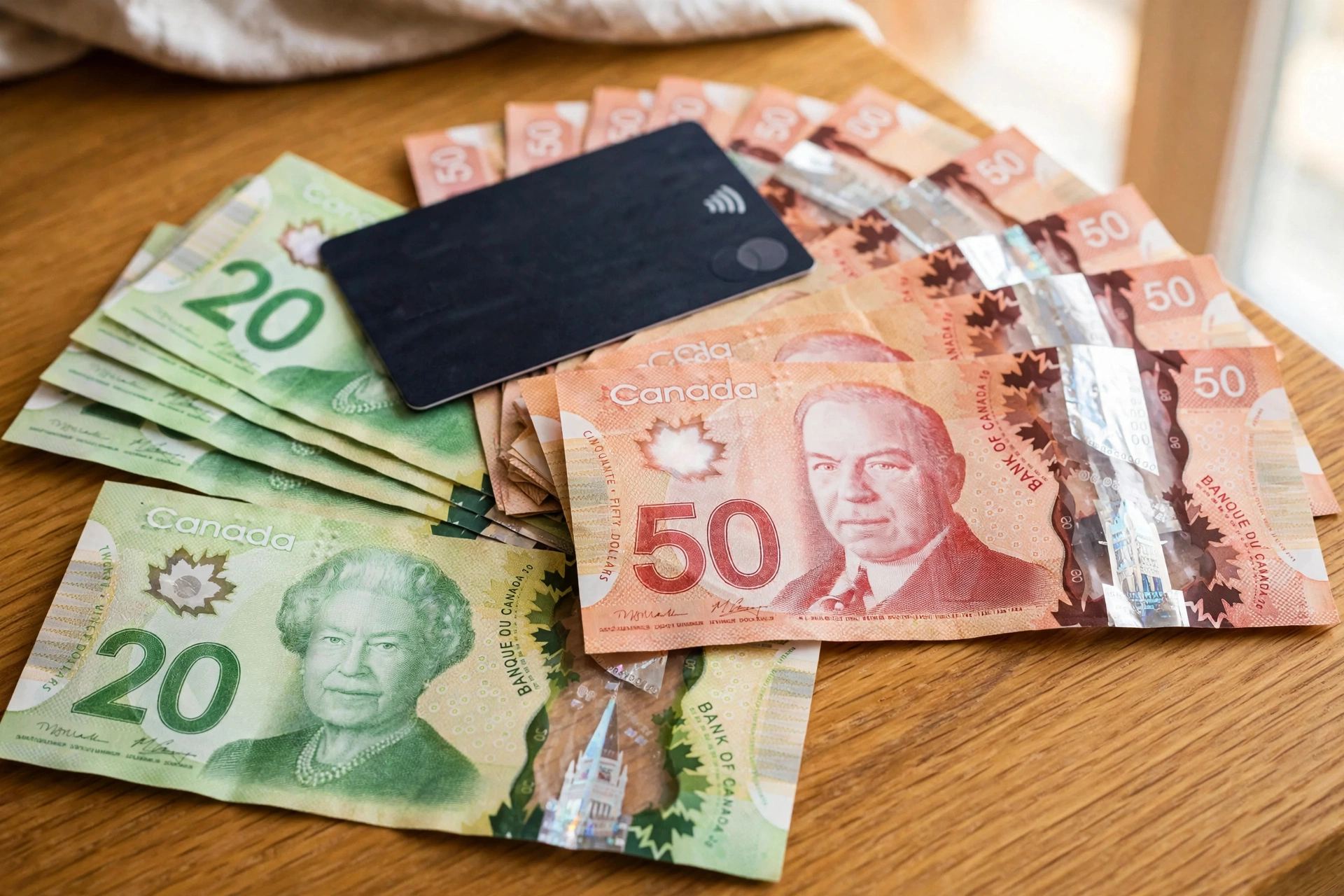
Six big banks are competing for your first paycheque with newcomer packages. Three digital banks charge no fees at all. Here is what each one actually costs, and the two-account strategy that beats them all.
Your first week in Canada, someone will tell you to open a bank account. Your second week, the bank will tell you the account is free. Both things are true, and the second one has an expiry date.
Every big bank in Canada runs a newcomer package: no monthly fee for a year or two, a credit card with no Canadian credit history required, sometimes a cash bonus. Then the promo ends and the meter starts: $12.95 to $17.95 a month, unless you park $4,000 in the account doing nothing. For a newcomer, that is not a waiver. That is a hostage situation.
This guide compares all nine options worth knowing, with the emphasis where it belongs: what you actually pay. Figures checked October 2, 2026, mostly from the banks’ own pages. This is desk research, not a branch visit, and promos shift without warning. Confirm the current offer before you sign anything.
The big bank packages
All six follow the same playbook: free banking for a promotional period, then a monthly fee you can only dodge with a minimum balance most newcomers do not have.
CIBC: the longest free runway. The Welcome to Canada package gives you two years with no monthly fee on the Smart Account, the longest free window of any big bank. After that it is $0 or $16.95 a month depending on the tier. The newcomer credit card (Adapta Mastercard, $0 annual fee) needs no income verification and no security deposit. There is a $500 cash bonus on the official offer page, plus extras like a Koodo phone plan trial and a Skip+ membership. If you want maximum time before fees kick in, start here.
BMO: two years free, strong extras. The NewStart program also runs two years free on the Performance Chequing Account, then $17.95 a month waived with a $4,000 minimum balance. No-fee global money transfers to 50-plus countries, a no-fee newcomer credit card, and family member accounts at no extra charge. The two-year BMO/CIBC tier is the sweet spot for newcomers who want a full-service bank.
Scotiabank: best for sending money home. StartRight gives one year free on the Preferred Package ($16.95 a month after, waived with $4,000). The standout is international transfers: StartRight members pay no service fee on international money transfers, and a current promo runs $0 fees to 73 countries with most delivered within an hour. You can also open an International Account online before you even land and move up to $50,000 CAD in. If remittances matter to you, and they do to most of us, this deserves a hard look.
RBC: the cheapest after the promo. Newcomer Advantage gives 12 months free on the Advantage Banking account, and the regular fee after is $12.95 a month, the lowest of the big banks. Unlimited debit transactions, free e-transfers, two free international money transfers a month, and a no-fee newcomer Cash Back Mastercard. No cash bonus found on their official pages. The honest pick if you plan to stay with one bank long term and want the lowest ongoing cost.
TD: biggest cash bonus, highest fee. New to Canada Banking gives a year free on the Unlimited Chequing Account. Their offer page says 12 months, but confirm this before you go, because one recent listing said six. After that: $17.95 a month, waived with $4,000 sitting in the account every single day. The sweetener is up to $400 cash on the chequing account, the biggest headline bonus of the group. Good if you want the bonus and plan to leave before the fee starts.
National Bank: fine print, weak GTA presence. Year one has no monthly fees on The Connected account ($15.95 regular), year two is free if you hold their credit card plus direct deposit or bill payments, year three is half price. But branches are concentrated in Quebec with a thin Ontario footprint, which matters when you need to sit across from someone in Brampton or Scarborough. Only pick this if you rarely need a branch.
The no-fee track
Tangerine, Simplii, EQ Bank: $0 a month, forever. No monthly fees, unlimited transactions, free e-transfers. Tangerine rides on Scotiabank’s 3,500-plus ATMs; Simplii on CIBC’s 3,400-plus. Simplii even runs its own New to Canada program with free global money transfers. EQ Bank pays 2.50% on savings (4.00% with direct deposit) and reimburses ATM fees.
The catch: digital banks generally want a SIN and a Canadian address at signup. EQ Bank states it outright. On day one, fresh off the plane, you usually cannot open one. That is what the big-bank branches are for.
Also know your rights: under federal rules, a bank must open a basic account without a SIN. Your foreign passport plus your work permit, study permit, PR card or confirmation of permanent residence is enough. A SIN is only legally required for interest-bearing accounts. No bank may refuse you for not having one yet, and you do not need a job.
The strategy: run two accounts
Here is the play that beats every single offer on this list.
Step one: On arrival, open a big-bank newcomer account in a branch. CIBC or BMO for the two-year runway, Scotiabank if you send money home often. Take the free credit card on the spot. This is the single most important move: a no-fee card in your first month starts your Canadian credit history from day one, which is what landlords and car dealers will check later.
Step two: Once you have your SIN and an address, open Tangerine or Simplii online. Takes twenty minutes.
Step three: When the big-bank promo expires, move your daily banking to the no-fee account. Keep the big-bank account only if the math works, which for most newcomers it does not. Nobody should pay $17.95 a month to access their own paycheque.
Sending money home
One more thing the banks will not volunteer: their own international wires are consistently the most expensive way to send money to Jamaica. In one tested comparison, a big-bank wire cost about $60 on a $1,000 transfer once the FX markup was counted. Wise charges roughly $5 to $8 per $1,000 at the real mid-market rate, and Remitly is competitive especially on smaller and first transfers. Use your Canadian account to fund the transfer, not to make it.
The bottom line
If you want one answer: open CIBC or BMO on arrival for the two free years and the newcomer credit card, open Simplii or Tangerine once you have your SIN, and never pay a monthly banking fee in your life. Verify the current promo before you walk in, because the only constant in newcomer banking is that the offers change.



Get the next guide first. Join the Yardie Dispatch.





Be the first to comment. Start the conversation!