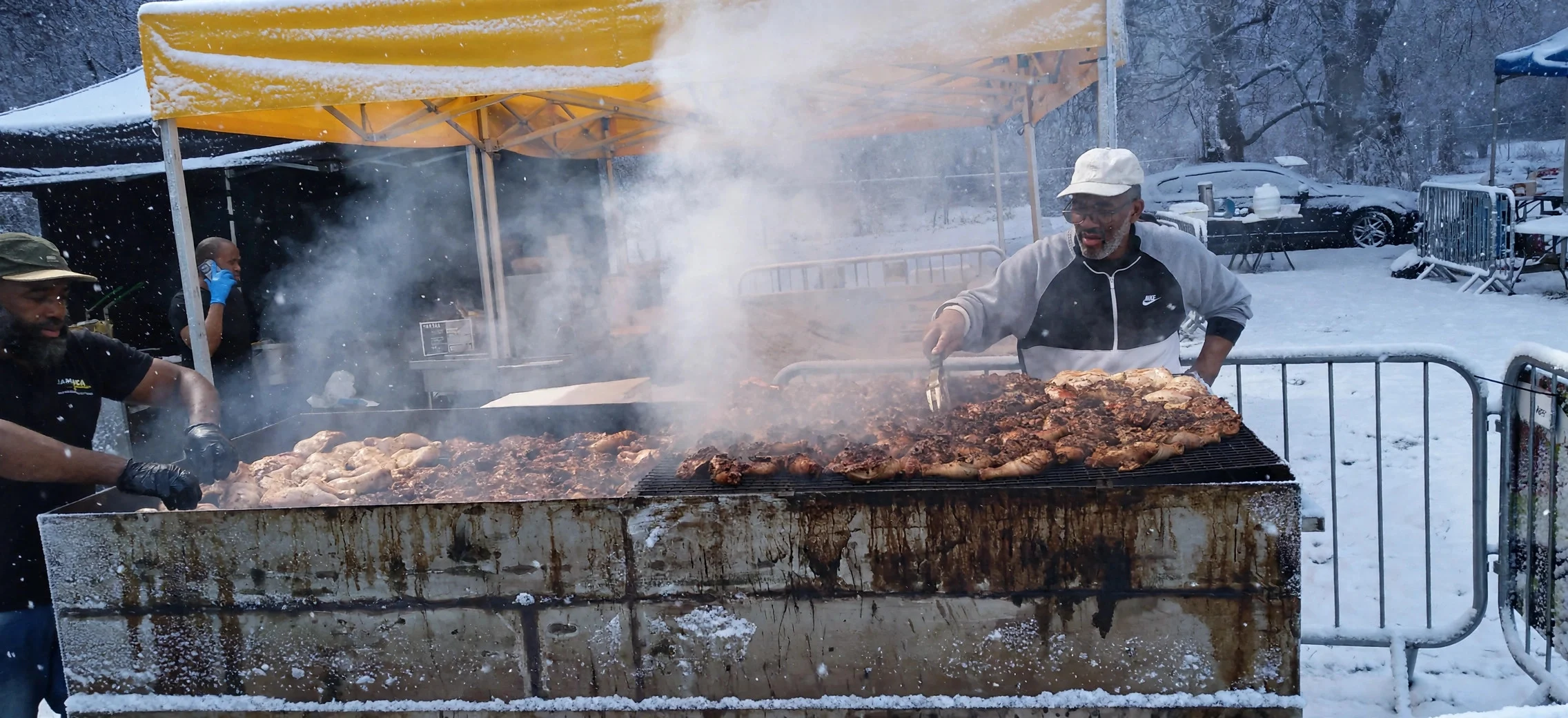
Picture a January night in Scarborough. Snow piled on the fence, your breath fogging in the porch light, and from a barrel grill in the backyard a ribbon of smoke that smells like cloves, cinnamon, black pepper and something wilder underneath. Neighbours two doors down catch it and know exactly what time it is.
That smell is pimento wood, and it is doing something no gas grill and no oven can fake. This is the story of the tree, the smoke, and the beautiful stubbornness of cooking real jerk at minus fifteen.
The tree that seasoned a nation
In Jamaica the tree is called pimento. Botanists call it Pimenta dioica. The rest of the world calls its dried berries allspice, because some long-ago European tasted one and swore it held cinnamon, nutmeg and cloves all at once.
The chemistry backs him up. The dominant aromatic compound in pimento is eugenol, the same molecule that gives cloves their signature scent. In one analysis of Jamaican pimento essential oil, eugenol made up roughly three quarters of the total, trailed by methyl eugenol and caryophyllene. That is why a single berry can stand in for half a spice rack.
Here is the part most people miss: the flavor is not only in the berries. The leaves, the bark and the wood of the pimento tree all carry those aromatic oils. When you cook over pimento wood, you are not just applying smoke. You are vaporizing the tree’s own perfume directly into the meat. That is why jerk cooked over pimento wood tastes like nothing else on earth, and why at legendary jerk spots in Jamaica the pork and chicken go directly onto pimento wood fires, not onto grates floating above them.
What smoke actually is
Wood smoke is not one flavor. It is a blizzard of hundreds of compounds, and the mix depends on the wood. When lignin, the polymer that gives wood its rigidity, breaks down in heat, it releases phenols: guaiacol, which reads as classic smoky and almost bacony, and syringol, which brings a sweeter, almost vanilla-edged smoke. Meanwhile the wood’s cellulose and hemicellulose break into carbonyls that deepen color and add caramel notes.
Pimento wood tilts this whole cocktail toward eugenol and its cousins, layering warm spice directly into the smoke itself. Green pimento wood, the traditional choice, smoulders cooler and throws more of that aromatic smoke than kiln-dried hardwood. The old Maroon method understood this without a chemistry set: dig a pit, build the fire from pimento wood, lay the meat close over it, and cover the whole thing with zinc sheeting or banana leaves so the smoke has nowhere to go but into the meat. The cover also kept the cooking hidden from colonial patrols in the Blue Mountains. Jerk was preservation, flavor and camouflage in one pit.
And that is the line the culture draws to this day: jerk is a method, not a spice packet. Meat roasted in an oven with jerk seasoning is jerk marinated. Real jerk met real pimento smoke.
The Canadian cold problem
Now bring that pit to Toronto in February and physics starts arguing with you.
A smoker is a box fighting heat loss, and heat loss scales with the gap between inside and outside. Hold 110C inside while it is minus 15C outside and your fire is bridging a 125-degree gradient, roughly double the fight of a mild autumn day. The practical consequences stack up fast.
Fuel: expect to burn 20 to 50 percent more wood or charcoal than the same cook in October. Cold-weather pitmasters stock half again as much fuel and still keep a reserve bag by the back door.
Time: everything takes longer. Heat escapes faster, recovery after you open the lid is slower, and the meat itself starts colder. Plan for the long cook and start earlier than your instincts say.
Wind: the real villain. Wind strips heat off thin steel faster than still cold air ever could, and it can make temperatures swing wildly or even blow out a flame. A windbreak, even a few sheets of plywood, matters more than any gadget.
The lid rule: in summer, peeking costs you a few minutes. In freezing weather, one ten-minute lid opening can add half an hour or more to the cook as the smoker claws its way back to temperature. Trust the thermometer, not your eyes.
The stall gets stranger too. Winter air is brutally dry, and dry air pulls moisture off the meat’s surface faster, which can deepen the evaporative-cooling stall that parks a pork shoulder at 70C for hours. A water pan in the smoker is cheap insurance.
There is one quiet gift in all of this: longer cook times mean longer contact with the smoke. The same cold that punishes your fuel rewards your flavor, laying down a deeper smoke character than a quick summer cook ever could.
The playbook for pimento smoke at minus fifteen
None of this is a reason to wait for spring. It is a checklist.
Insulate. A welding blanket or purpose-built smoker blanket wrapped around the cook chamber cuts heat loss dramatically. Preheat longer, 35 to 50 minutes, so the metal itself is heat-soaked before the meat goes on.
Shelter the fire. Tuck the grill into a corner out of the wind, keep a windbreak up, and never cook in an enclosed garage. Carbon monoxide does not care about your jerk ambitions.
Cook to temperature, not time. A probe thermometer is non-negotiable when the weather is rewriting your schedule.
Mind your fuel type. Propane regulators can struggle and sputter as temperatures plunge, while charcoal and wood just ask for more of themselves. If you run gas, keep the tank full and sheltered.
And the pimento problem: real pimento wood is scarce in Canada. Caribbean grocers in the GTA sometimes carry it and specialty suppliers ship it, but when you cannot get the wood there is a respected workaround. Scatter dried pimento leaves and a handful of whole allspice berries over your coals. They will not replace a full pimento fire, but they release the same eugenol-rich aromatics into the smoke stream, and the difference is real.
Smoke as continuity
There is a reason to do this the hard way. Every winter, somebody’s grandfather in Scarborough or Flatbush or Brixton stands over a smoker in a parka, tending a fire the way it was tended in the Blue Mountains three hundred years ago. The Maroons cooked in pits to survive. We cook in the snow to remember.
When that eugenol-laced smoke cuts through minus-fifteen air and drifts down the street, it is doing what it has always done: announcing that Jamaican people are here, that the culture traveled intact, that no amount of cold can smoke it out. The science explains the flavor. The stubbornness explains everything else.
The Allspice Chronicles is a Food desk explainer. The smoke chemistry described here reflects published analyses of Jamaican pimento oil and widely documented cold-weather barbecue practice.
Get the next ranking first. Join the Yardie Dispatch.

Be the first to comment. Start the conversation!