
A CanadianYardie editor reviews Fanon from the Canadian premiere at Innis Town Hall.
Sunday night at Innis Town Hall, Diaspora Film Festival closed its 26th edition with the film its Caribbean audience had been waiting for. I was in the room for it. Fanon, Jean-Claude Barny’s 2024 biopic of Frantz Fanon, screened at 5:55 PM on Nov 8, presented with the Windrush International Caribbean Film Festival. It was the Canadian premiere, and the room knew it.
Fanon was born in Fort-de-France, Martinique, in 1925. He trained as a psychiatrist, wrote Black Skin, White Masks and The Wretched of the Earth, and became one of the most quoted anti-colonial thinkers in the world. This film does not try to cover all of that. It stays in one place and one stretch of time: Algeria, 1953 to 1956, where Fanon has just been appointed head of a ward at the Blida-Joinville Psychiatric Hospital.
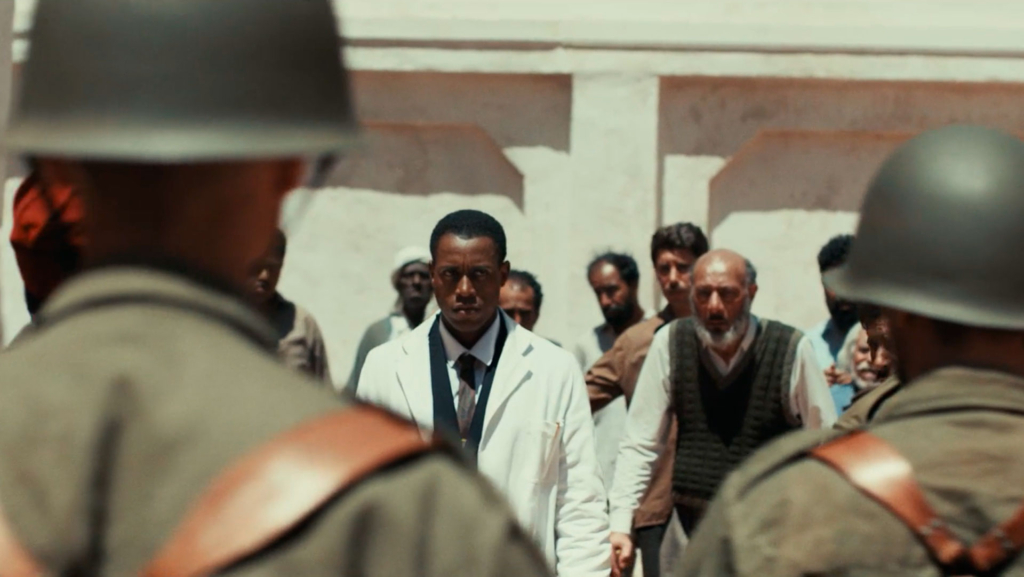
That focus is the film’s smartest choice. Inside the hospital walls, the argument is not abstract. Fanon wants to treat Algerian patients as people, not cases. His methods clash with the other doctors, and with a colonial system that runs on keeping people small. The film lets that clash build slowly, scene by scene, until the hospital stops looking like a workplace and starts looking like a country in miniature.
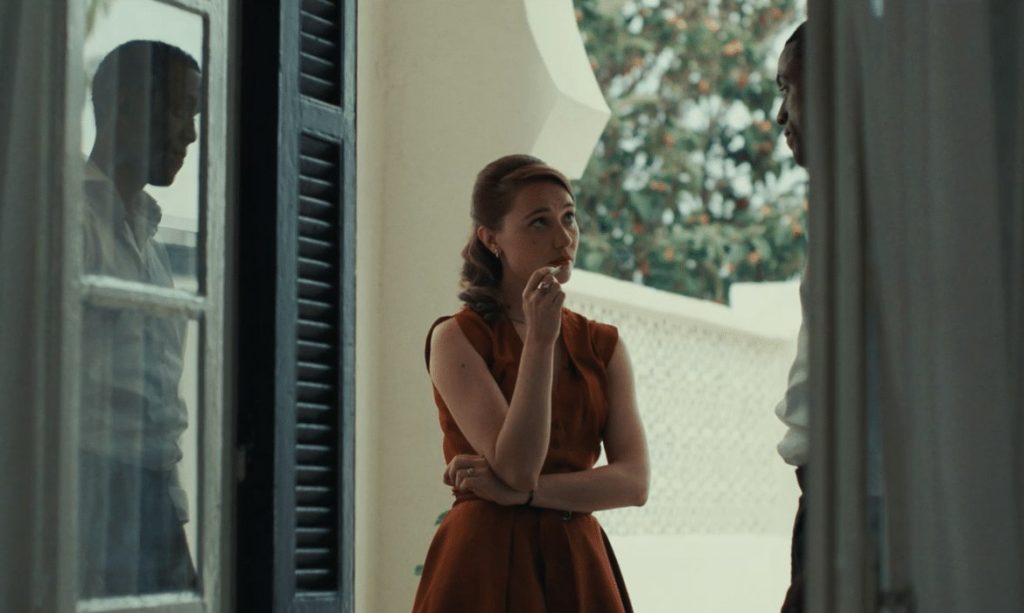
Barny, whose own heritage connects Guadeloupe and Trinidad and Tobago, shoots the film like a man telling a story about someone he respects, not a statue he is polishing. Alexandre Bouyer plays Fanon with a quiet steadiness that fits the role. He is not playing a speech. He is playing a doctor who watches, listens, and decides where he stands. Déborah François plays his wife Josie, and the scenes between them give the film its breathing room. Away from the ward, Fanon is a husband trying to hold a life together while the world outside the hospital gates gets harder to ignore.
The period detail does a lot of the work. The film opens on Algeria in 1953 in big red letters, then moves through white villas, stone ruins, vintage cars, and the hospital gate flying the French flag. It looks lived in, not dressed up. The French and Arabic dialogue, with English subtitles, keeps the setting honest. You are in colonial Algeria, and the film does not soften that for you.
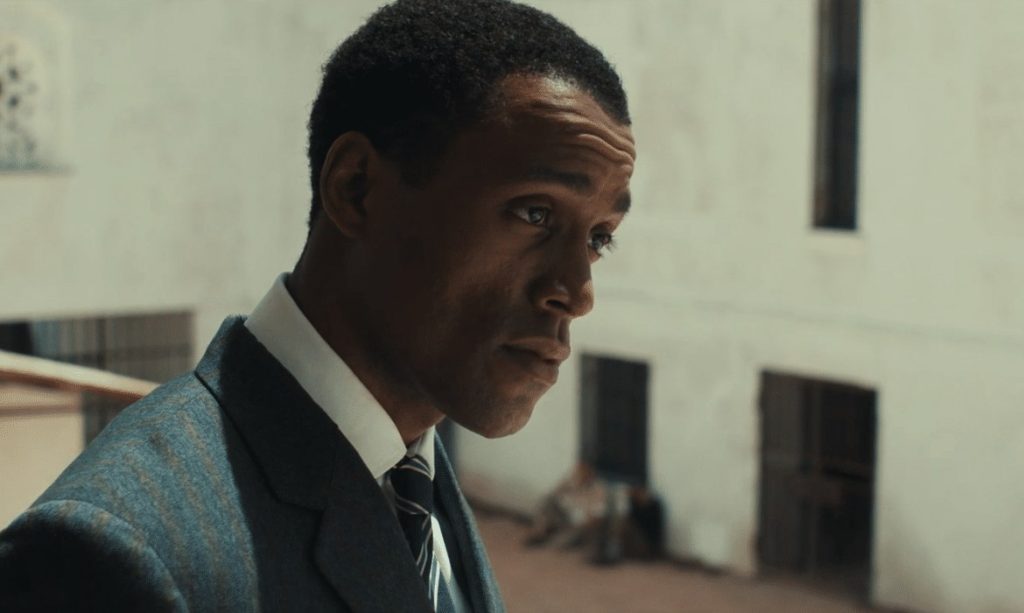
The moment that landed hardest for me came right at the start. Fanon arrives with his wife Josie, and the people greeting them take him for a helper carrying her luggage. One of them asks her when her husband will arrive. I kept coming back to that scene, and to what it says about the film: the racism is not background, it is the first thing you meet. Inside Blida-Joinville, the hospital itself is part of the argument. The wards are dark, dirty and unmaintained, closer to a prison than a place of care, and Fanon is moved by how the patients are treated. He does not see prisoners. He sees men, and he fights for them to walk in the courtyard because movement stimulates the brain, even as the guards say it is not safe. He pushes for a playing field so they can have physical activity, and the director tells him he is on his own. Doubt and undermining follow him through the film. What carries him is his reputation, the one thing nobody in the room can dismiss.
For a Caribbean audience in Toronto, the film hits a second level. Fanon is ours before he is anyone else’s. He was born in Martinique, and his writing still shapes how Caribbean people talk about dignity, identity, and freedom. Seeing his story on a Toronto screen, in a festival built around diaspora, with a mostly small and focused crowd in the room, felt right. This was not a big premiere with noise around it. It was a room full of people who came for the film itself.
The film is in French, with English subtitles, so I was reading as I watched while trying to make notes, and that was hard work at times. It never pulled me out of the film, though. What stayed with me after were three things: how oppression damages the mind, how systems of power strip people of dignity, and how one man moves from treating patients to challenging a whole colonial system.
Fanon is not a light night out. It is 133 minutes, it is subtitled, and it asks you to sit with hard questions about colonialism, psychiatry, and who gets treated as fully human. But it is also the kind of film a festival exists to show: a Caribbean thinker, a story that still matters, and a room in Toronto where it lands the way it should.
If you missed it at Innis Town Hall, keep an eye on Diaspora Film Festival and WICFF for the next chance to see it. This one deserves a crowd. Is it worth watching? Yes, especially if you are interested in Black history, revolution, philosophy, psychology, and stories about fighting injustice.
9 out of 10. Properly directed, and the actors were excellent.
Details:
Fanon (2024), directed by Jean-Claude Barny
Starring Alexandre Bouyer and Déborah François
133 minutes, French and Arabic with English subtitles
Screened Sunday, Nov 8, 2026, 5:55 PM, Innis Town Hall Theatre, Toronto
Diaspora Film Festival 26, Nov 5 to 8, 2026, theme Building Bridges



Get the next guide first. Join the Yardie Dispatch.



Be the first to comment. Start the conversation!