
For four days, the second half of Canada’s biggest immigration announcement had no name. Budget 2026 said up to 200,000 temporary residents already in Canada would get a chance at permanent residence by the end of 2027, and it said 100,000 of them would be workers. The other 100,000 were a blank. On November 5, the Immigration Levels Plan gave that blank a name. It is the humanitarian cohort, and now we know who IRCC says it is for.
The plan itself is steady on the surface. Canada will admit 380,000 permanent residents a year in 2027, 2028 and 2029, and 370,000 new temporary residents a year, split between 220,000 workers and 150,000 international students. Those targets were tabled with Budget 2026 on November 5 by Finance Minister Francois-Philippe Champagne, and the Immigration Levels Plan was folded into the same announcement. The headline numbers did not move. The story is in the measure that sits outside them.
The time-limited measure gives IRCC additional admissions space in 2027 to process permanent residence applications for people already living in Canada. It is not part of the 380,000 annual target, which means 2027 could see up to 580,000 new permanent residents if both the target and the measure are fully used. The budget funds it with 302.3 million dollars over four years starting in 2027-28, plus 90.6 million in later years.
The two halves
The workers cohort is the half we already knew. Up to 100,000 workers already in Canada, plus their families, will move to permanent residence through Express Entry or the Provincial Nominee Program, working with the provinces and territories. IRCC says it will work in two ways: bigger Provincial Nominee Program allocations, so provinces can nominate workers who meet their regional needs, and by identifying workers who already applied under select federal programs. IRCC names the Atlantic Immigration Program, the Start-up Visa Program, the Self-Employed Persons Program, the Agri-Food Pilot, and home care worker programs. Several of those programs are closed to new applications, so this part helps people already waiting in those inventories, not new applicants.
The humanitarian cohort is the half that now has a name, and its contents are specific. IRCC says it will process all remaining applications under the Hong Kong permanent residence pathways, and all remaining applications under the Ukraine Family Reunification Pathway. It will finalise applications from people already found eligible for permanent residence on humanitarian and compassionate grounds. And it will process permanent residence applications from spouses, common-law partners and dependent children of Canadians and permanent residents who already live in Canada.
That last item could matter to many families. IRCC says the measure will significantly help bring wait times closer to 12 months for the spouse or common-law partner class, for applicants going to provinces and territories outside Quebec. If you have been waiting on an inland spousal file for years, that sentence is the most important one in the whole announcement.
There is also a new detail since the budget. In a letter shared online by Conservative MP Michael Ma, Immigration Minister Lena Metlege Diab said the department will finalise all outstanding permanent residence applications received on or before September 30, 2024 under the Hong Kong pathways. That is a date and a promise, and it is the clearest sign yet of how the humanitarian cohort will actually work: not by opening a new door, but by clearing the files already sitting on the desk.

Photo: Joli Rumi, via Wikimedia Commons, CC BY-SA 4.0.
What it is not
Three things need saying plainly, because the headlines have been misleading. First, this is not a general amnesty. The humanitarian cohort targets specific existing pathways and files, not everyone who has been in Canada a long time. Nothing in the published material describes a regularisation program for people without status.
Second, there is nothing to apply for yet. IRCC has not published eligibility criteria for either cohort, has not said whether people will need to submit a new application or will be selected from existing inventories, and has not given an opening date or a step-by-step process. No form, no portal, no intake date. Anyone selling a registration, a guaranteed spot or a fast-track for this measure is not offering anything IRCC has created.
Third, the numbers are “up to” figures, and the budget measures are proposals that still need to be implemented. The 200,000 is a ceiling, not a promise to every person in the country on a temporary permit.
What it means for Caribbean Canadians
There is no Caribbean-specific measure in this plan, and this article does not invent one. The tie is practical, not political. Caribbean temporary residents are already in Canada in large numbers: farmworkers under the Seasonal Agricultural Worker Program, international students, caregivers, and hospitality workers. The workers cohort runs through the provinces, which means a Jamaican farmworker in Ontario or a Trinidadian student in Toronto will be affected by how their province uses its bigger nominee allocations, not by anything with the Caribbean’s name on it.
The humanitarian cohort touches Caribbean families too, through the spousal sponsorship files and the humanitarian and compassionate cases that have been waiting for years. And the wider context matters: new worker arrivals from January to August 2026 were 57 percent lower than in the same period of 2024, and international student arrivals were down 71 percent. The government’s message is fairness for people already settled here, combined with a cut to new arrivals. For a community that sends its young people here to study and work, that trade is the real story, and it will be felt in living rooms across the GTA long before any form is published.
The Toronto Caribbean Investment Summit in September heard the same message from the business side: the diaspora’s relationship with Canada is not only about arriving, it is about staying, and what staying builds. A pathway that turns temporary residents into permanent ones is part of that story, even when it arrives without a Caribbean label on it. Watch your province, keep your status valid, keep your contact details current in your IRCC account, and wait for the eligibility rules. The missing 100,000 now has a name. The details are still to come.
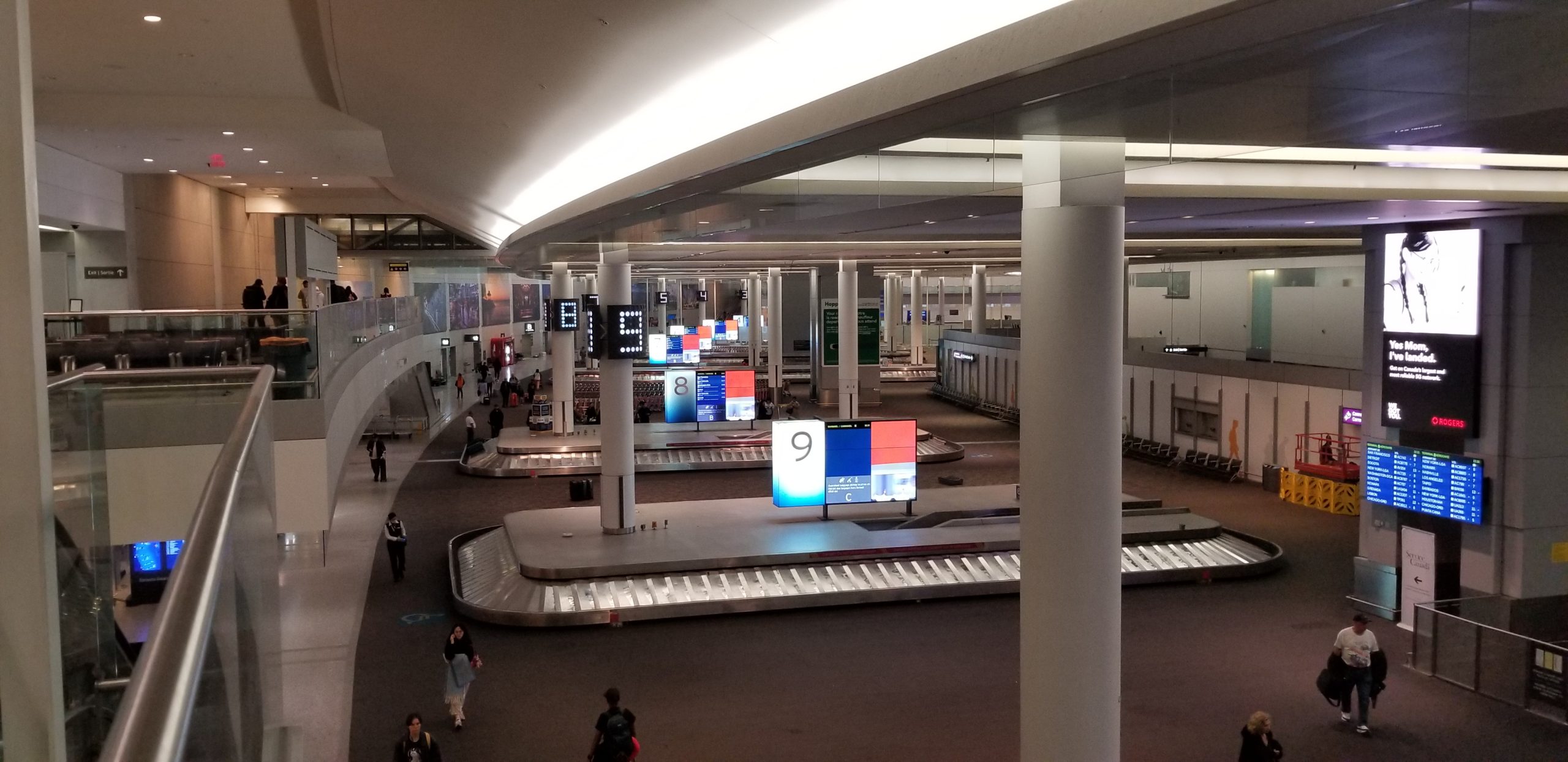
Photo: Silver Dovelet, via Wikimedia Commons, CC BY-SA 4.0.
FAQ
What is the humanitarian cohort?
The second half of the 2027 time-limited measure, covering up to 100,000 people already in Canada: remaining Hong Kong and Ukraine family pathway files, people already found eligible on humanitarian and compassionate grounds, and in-Canada spouses, partners and dependent children of Canadians and permanent residents.
Can I apply for the 200,000 PR measure now?
No. IRCC has not published eligibility criteria, an application process, or dates. There is no form to file today.
Is this an amnesty?
No. It targets specific existing pathways and files, not everyone who has been in Canada a long time, and nothing in the published material describes a regularisation program for people without status.
What are the headline targets?
380,000 permanent resident admissions a year and 370,000 new temporary resident arrivals a year, for 2027, 2028 and 2029.
Sources
- Department of Finance Canada, Budget 2026, Chapter 3, section 3.4.
- Immigration, Refugees and Citizenship Canada, “Building a stronger Canada through a well-managed, predictable immigration system” (backgrounder, November 5, 2026).
- Immigration, Refugees and Citizenship Canada, “Supplementary Information for the 2027-2029 Immigration Levels Plan” (November 5, 2026).
- Immigration 2 Canada, “200,000 Temporary Residents to Get PR by 2027: Who Qualifies,” last verified November 6, 2026. https://www.immigration2canada.com/200000-temporary-residents-pr-2027/

Get the next ranking first. Join the Yardie Dispatch.



Be the first to comment. Start the conversation!