Picture a soca artist in Scarborough, coming off a summer of fetes, checking her phone. The headline waiting for her says Ottawa just told Canadian artists the first $45,000 is on the house. Budget 2026, tabled on November 5, really does propose a Canada Creative Credit that could leave up to $45,000 of an artist’s income untaxed. Prime Minister Mark Carney said it himself: if you are a Canadian artist, you will not pay tax on up to $45,000 of income derived from your creative work. But the number comes with fine print, and for the Caribbean artists building a living in Toronto, the fine print is the story. Update: read what changed since our first report — the consultation now closes January 8, 2027.
What Ottawa actually announced
Budget 2026 was tabled on November 5 by Finance Minister François-Philippe Champagne, and the Canada Creative Credit gets one short paragraph in Chapter 4. The budget says the government intends to consult Canadians and the cultural sector on a new credit, expected to take the form of a non-refundable personal income tax credit that would, combined with the Basic Personal Amount, provide tax recognition on up to $45,000 of annual qualifying net business income derived from original and creative artistic works. Details will be announced in the Spring Economic Update in 2027.
This is a consultation announcement, not a finished law: the budget must still be passed to become law. There is no application form, no claim to make today, and nothing for your 2026 taxes. The income it would cover is net business income from original and creative artistic works: net means after expenses, and business income means the self-employed kind, how most working artists here actually earn.
The $45,000 number, done properly
Here is the correction. The $45,000 is already being shared around as if it is $45,000 on top of everything else. It is not: the credit would, combined with the Basic Personal Amount, provide tax recognition on up to $45,000 of qualifying income a year. The Basic Personal Amount is the first chunk of income every Canadian already pays no federal tax on: $16,452 in 2026. So the new part, the extra sheltered slice, is roughly $28,500, and at the lowest federal tax rate the saving tops out around $4,000 a year for an artist with at least $45,000 in qualifying income. Those are analysts’ examples, not government figures: the budget has published no rate or formula yet.
Now put that on a real Toronto artist’s books. A soca singer in the GTA who nets $30,000 in a year from shows, streams, and merch gets roughly $1,900 back. At $20,000, roughly $500. Researchers put the median artist’s income in Canada at around $24,000 a year, and at that level a few hundred dollars is paint or another month of rent. It scales from the bottom, and the bottom is where most working artists live.
Then the fine print that decides who benefits. The credit is non-refundable: it lowers tax you owe but never pays out beyond that. If your net art income sits at or under the Basic Personal Amount, you already owe no federal tax on it, and this credit gives you $0. The artists earning the least get the least from it.
What it means for Caribbean artists in the GTA
For the soca singers, DJs, producers, visual artists, writers, and photographers building a living in Toronto, this is aimed at how most of them earn: self-employed, original work, sold directly to the people who want it. Natasha Marie, the Montreal soca artist we featured in our CanadianYardie Radar series, is exactly the kind of working artist this is written for. The same goes for the DJs holding down Toronto’s soca scene.
But the questions that matter most are still unanswered. Does a grant count? Teaching? Royalties? Live performance fees? The definition Ottawa lands on will decide whether a working Caribbean artist in Toronto qualifies.
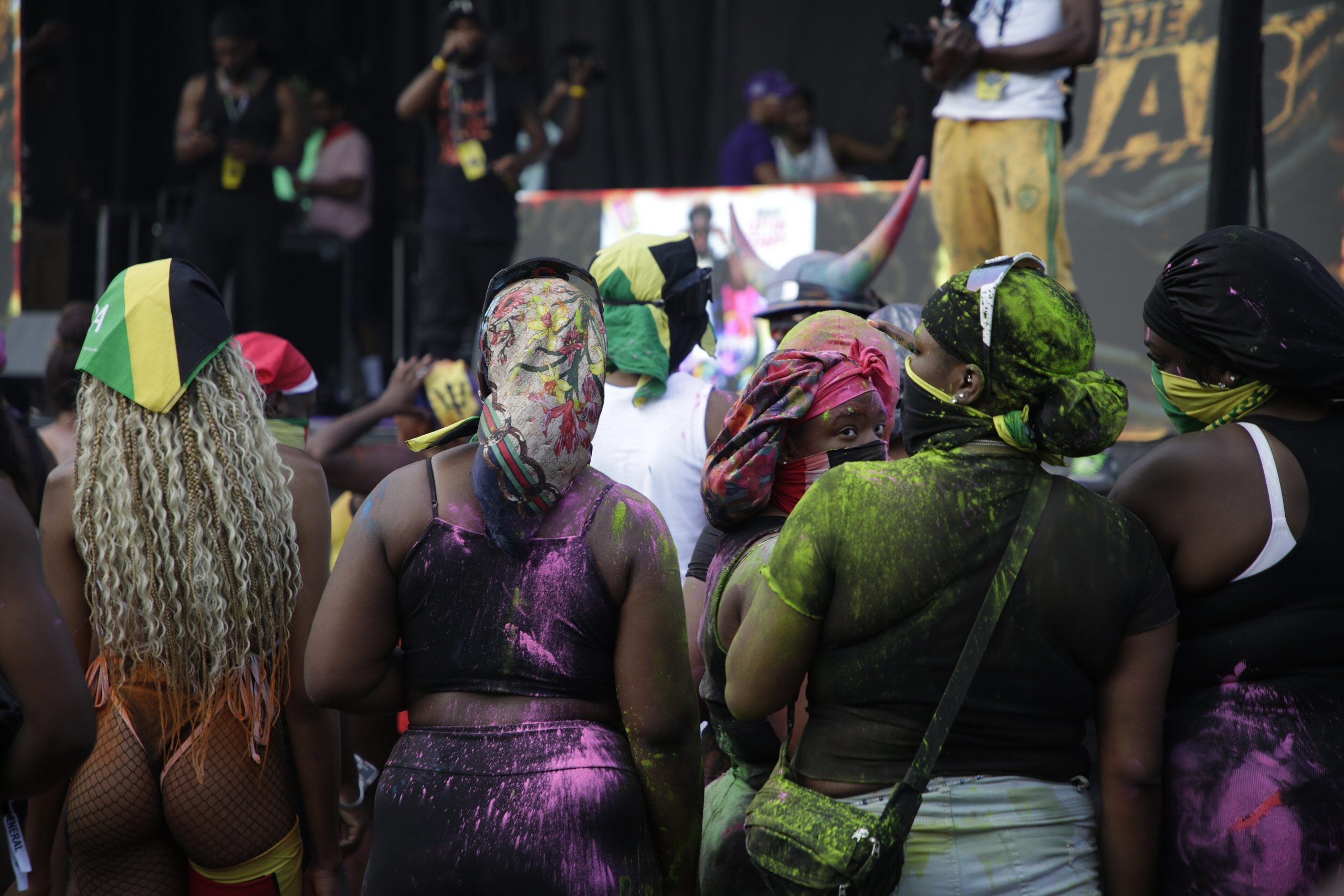
The scene around the artists gets something too. Festival funds get a lift: $15 million more for the Canada Arts Presentation Fund, $10 million more for Building Communities Through Arts and Heritage. That is the money that keeps stages lit, from the Toronto Caribbean Carnival to small festivals in Scarborough, Brampton, and Little Jamaica. The Canada Council gets $20 million over three years, $8 million of it in 2026-27: about 2.2 percent of its funding, below inflation and far short of the $140 million sought, according to CAPACOA. And when Ottawa puts this kind of money on the table for Black communities, as it did with the $135.7 million announced in October, the question is the same: how much reaches the people doing the work?
Two other pieces matter. Employed artists will see the $1,000 cap on deducting work expenses replaced from the 2027 tax year with a limit tied to their qualifying artistic employment income. Proposed Copyright Act changes would bring in an Artist’s Resale Right, so visual artists get a royalty when their original work is resold. Musician and MP David Myles, who pushed for it for years, called the credit enormous.
The sector’s warning is worth hearing: a tax break could become an excuse to pull back direct funding, trading grants that pay for the work for a credit that only rewards artists already earning.
What to do right now
First, save your receipts. Second, keep your income streams separate: art sales in one pile, grants in another, teaching in another, other work in another. Third, watch for the consultation and speak up in it: the rules are unwritten, and artists who show up get counted. Jamaican filmmakers are already building creative work with no help from Ottawa, as our look at LAB Studios’ Christmas in the Tropics showed.

One more thing: do not change your 2026 tax plans. Nothing in this budget can be claimed yet. The earliest the credit could show up on a tax return is the 2027 tax year, filed in spring 2028. What you can do today is get your books in order.
Questions, answered
Is the $45,000 tax break in effect now?
No. Budget 2026 proposes the credit and a consultation, with details in spring 2027. The budget still has to pass Parliament to become law.
When is the earliest I could claim it?
The 2027 tax year, filed in spring 2028, if the details arrive on schedule and the measure becomes law.
What about artists who are employed, not self-employed?
From the 2027 tax year, the $1,000 cap on deducting work expenses would be replaced with a limit based on qualifying artistic employment income. The credit itself is aimed at net business income.
Sources: Budget 2026, Chapter 4, “A strong and united Canada” (Department of Finance Canada, budget.canada.ca); Department of Finance Canada, “Budget 2026: Key measures”; Canadian Association for the Performing Arts (CAPACOA), “Federal Budget Spotlights Canadian Artists and Audiences”, November 5, 2026; K-Media, “Canada Creative Credit: What Canadian Artists Need to Know”, November 6, 2026; Prime Minister Mark Carney, post on X, November 5, 2026. Dollar illustrations for the savings at different income levels are analysts’ worked examples based on the budget wording and the 2026 Basic Personal Amount of $16,452, not government figures. The credit’s final rate, formula, and eligibility rules have not been released.


Get the next ranking first. Join the Yardie Dispatch.




Be the first to comment. Start the conversation!