
Prime Minister Mark Carney went to Antigua and Barbuda for his first Commonwealth summit, and he came home with a headline number: more than $70 million in new investments. The number is real, and the Prime Minister’s Office published the breakdown. But read the breakdown closely and the story changes shape. Most of the $70 million does not go to the Caribbean at all. The Caribbean share is $23 million, and it arrives as four separate projects, not as one big cheque.
That is not a reason to dismiss the announcement. It is a reason to read it properly, because the $23 million that does reach the Caribbean is aimed at the exact things Caribbean Canadians talk about when they talk about home: schools that stay open after a storm, roads and water systems that survive the next hurricane, food and relief that arrives fast, and a seaweed problem turned into a business.
What Carney actually announced
The summit was the Commonwealth Heads of Government Meeting, known as CHOGM, held November 1 to 4, 2026 in St. John’s, Antigua and Barbuda. Fifty-six countries belong to the Commonwealth, home to about 2.7 billion people. Carney attended for the first time, accompanied by Foreign Affairs Minister Anita Anand, and hosted a meeting with Caribbean leaders to build momentum for the renewed Canada-CARICOM Strategic Partnership.
The Prime Minister’s Office release, published November 3, 2026, says Carney announced more than $70 million in new investments to strengthen resilience across the Commonwealth, including the Caribbean. The backgrounder published the same day lists five items. Four are Caribbean. One is not.
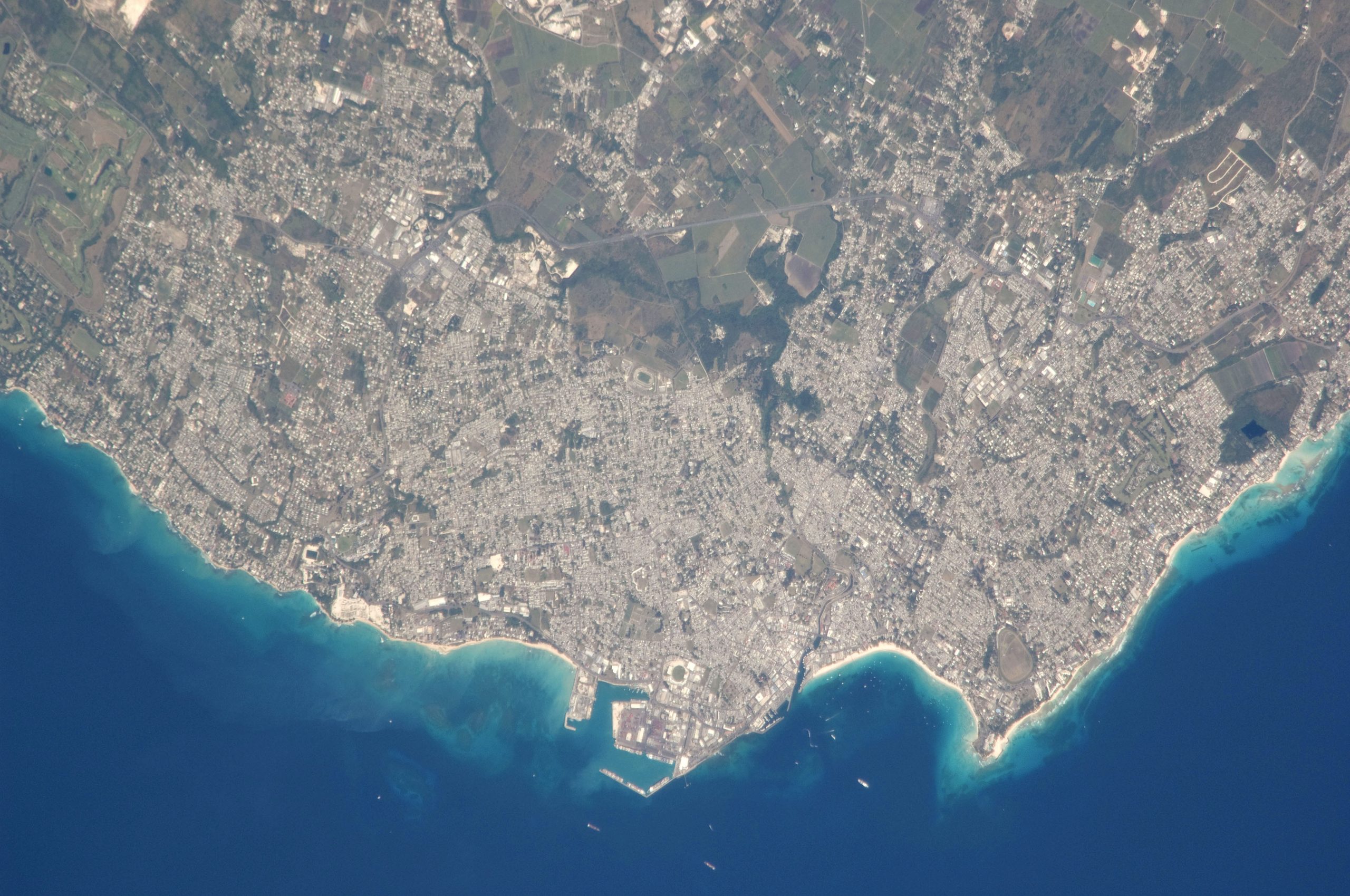
The Caribbean items are $10 million over six years to UNICEF, to help schools in seven Caribbean countries keep children learning safely during climate emergencies. The countries named are Belize, Dominica, Grenada, Jamaica, Saint Lucia, Saint Vincent and the Grenadines, and Suriname. Then $5 million over two years to the United Nations Office for Project Services, for a resilient infrastructure facility serving Dominica, Grenada, Saint Lucia, and Saint Vincent and the Grenadines. Then $5 million over two years to the World Food Programme’s Caribbean Regional Logistics Hub in Bridgetown, Barbados, which stores emergency supplies and dispatches food and relief after natural disasters. Then $3 million over three years to the International Trade Centre, to help Caribbean businesses turn sargassum, the seaweed that piles up on Caribbean coastlines, into fertilisers, building materials, and biofuels.
The fifth item is $50 million, a FinDev Canada loan to Zanaco, the largest financial institution in Zambia, to expand financing for small and medium businesses there, including women-owned businesses and agribusiness. Zambia is not in the Caribbean. It is in southern Africa. That loan is about $50 million of the more than $70 million total, which leaves $23 million for the Caribbean items listed above.
Why the split matters
There is nothing improper about the split. The announcement was a Commonwealth announcement, not a Caribbean announcement, and Zambia is a Commonwealth member. The release says so plainly. But the distinction matters for anyone in the GTA reading the headline and wondering what it means for Jamaica, Barbados, or Dominica. See also our report on 400,000 seats for Jamaica this winter.
The $23 million Caribbean share is real money aimed at real problems, and its shape tells you what Ottawa thinks the Caribbean needs most. Schools, infrastructure, emergency food, and sargassum are not glamorous items. They are the unglamorous backbone of surviving the next hurricane season. After Hurricane Melissa, which struck Jamaica as a Category 5 storm, that framing lands differently than it would have a year ago.
The trade question, and the guarantee that is not new
Carney also used the summit to talk trade. Reporting of his working breakfast with Caribbean leaders says he told them there is considerable room to grow the Canada-Caribbean trade relationship, already worth approximately $4 billion a year. Representatives from Jamaica, Barbados, Guyana, Belize, Trinidad and Tobago, and Antigua and Barbuda attended. No new trade agreement was announced. The renewed Canada-CARICOM Strategic Partnership is the framework the leaders pointed to, and the summit created momentum for it rather than a signed deal. See also our coverage of the Toronto Caribbean Investment Summit.
One figure that travelled with the summit coverage needs a correction before it hardens into fact. Some coverage described a $200 million Caribbean Development Bank guarantee as though Carney announced it in Antigua. He spoke about it at his November 3 press conference, but the guarantee is not new. The Bank’s board approved a US$200 million first-loss portfolio guarantee in June 2026, with the Government of Canada, and a June 4, 2026 Prime Minister’s Office readout valued it at approximately $277 million in Canadian dollars.
Minister Anand also announced more than $15 million in funding for initiatives across the Commonwealth as the summit concluded on November 4, 2026, covering sustainable development, economic prosperity, climate resilience, inclusive governance, and disaster response readiness. The Global Affairs release does not break out a Caribbean-specific share, so this article does not invent one.
What was not announced
Two things Caribbean Canadians will look for in the summit record are not there. The release announces no reparations outcome. Carney addressed reparations calls at his press conference, according to summit coverage, but the Prime Minister’s Office release contains no reparations commitment, no fund, and no timeline, and this article does not claim one exists.
The release also announces no new immigration measure, no new visa route, and no new Caribbean-specific programme for the diaspora in Canada. That is worth stating plainly because summit coverage sometimes blurs the line between a trade and resilience announcement and an immigration announcement. This one is about trade, investment, and climate action, in the release’s own words.
What to watch next
Three things are worth watching. First, the UNICEF schools funding runs over six years, so its first results will be slow. Second, the Bridgetown logistics hub is the most immediately practical item, because it stores the food and supplies that move first after a disaster, and its $5 million covers two years of operations. Third, the sargassum project is the smallest item at $3 million and the most entrepreneurial, because it tries to turn a coastal nuisance into fertiliser, building material, and fuel.
For Caribbean Canadians, the summit’s real message is narrower than the $70 million headline and more useful than a shrug. Canada is putting $23 million of grant money into Caribbean resilience, through the United Nations and the World Food Programme, while its bigger development finance bets go elsewhere. The Caribbean items are small, specific, and aimed at survival rather than spectacle. Whether that is enough is a fair question. Whether it is nothing is not.
Sources: Prime Minister’s Office release and backgrounder, November 3, 2026, “Prime Minister Carney deepens partnerships with Commonwealth nations across trade, investment, and climate action” (read in full); Global Affairs Canada release, November 4, 2026, Minister Anand concludes participation in CHOGM; Caribbean Development Bank press release, June 2, 2026, and Prime Minister’s Office readout, June 4, 2026, on the US$200 million guarantee; Commonwealth Union reporting, November 4, 2026, on the Caribbean leaders’ working breakfast and the approximately $4 billion trade figure.

Get the next ranking first. Join the Yardie Dispatch.



Be the first to comment. Start the conversation!